CET Energy Management: Building an Industrial Metering System
How to build an industrial energy-management system with CET meters and gateways in Pakistan - sub-metering, ISO 50001 monitoring, and Modbus/SCADA integration per IEC 61557-12 and IEC 62053-22.
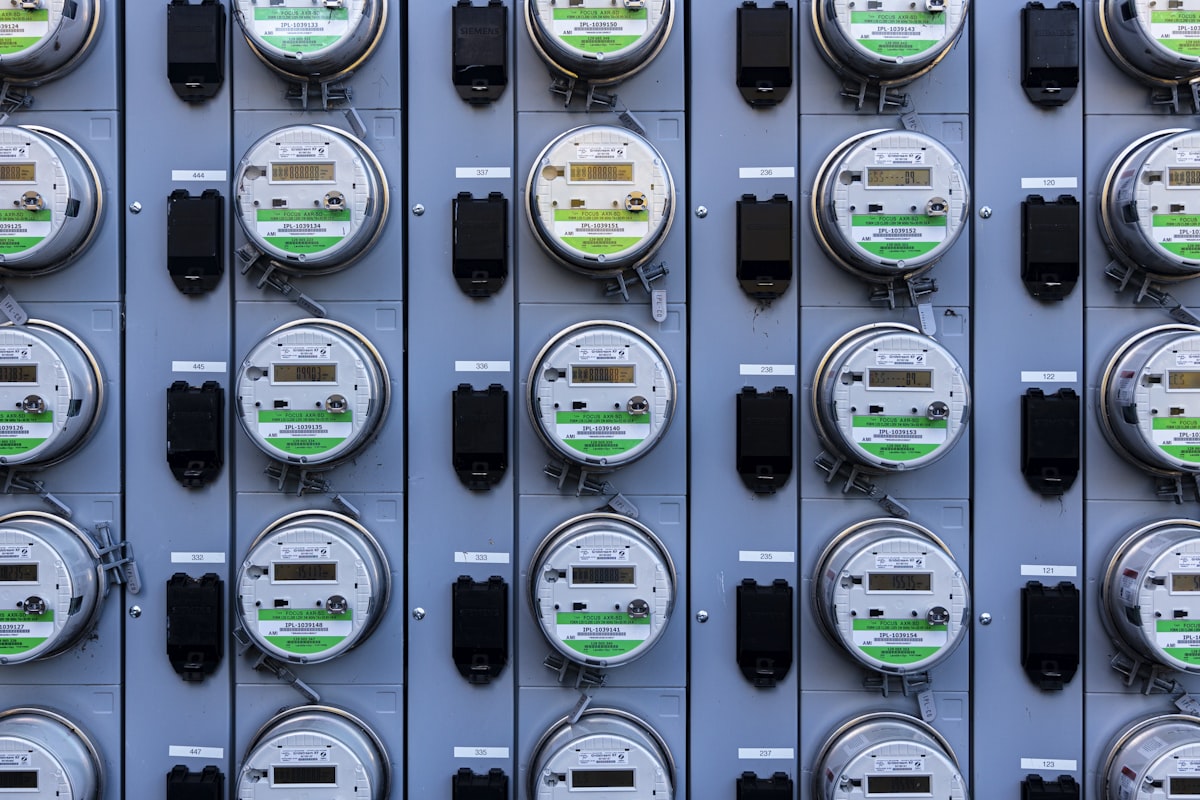
A Pakistani textile mill can pay tens of millions of rupees a year for electricity and still not answer a basic question: which line, which department, or which shift is burning it. The main meter reports the total; it says nothing about where the maximum-demand charge - the peak-tariff penalty that can be a third of the bill - is being created. You cannot manage energy you have not measured.
CET builds the meters, power-quality analyzers, gateways, and software that turn a single monthly bill into a measured, line-by-line picture [1]. This guide covers how a large Pakistani industrial consumer assembles that system: the metering chain, the standards that make the numbers defensible, and the integration to SCADA or an energy-management platform.
Why Measure Before You Manage (ISO 50001)
ISO 50001 [5], the international energy-management standard, runs on a simple loop: establish an energy baseline, define energy performance indicators (EnPIs), measure continuously, and act on what the data shows. The measurement is the foundation - without per-area consumption data there is no baseline, and no way to prove a change actually saved anything.
In Pakistan the financial driver is sharper than efficiency alone. NEPRA time-of-use industrial tariffs price peak hours well above off-peak, and the maximum-demand charge is billed on the single highest half-hour of the month. Metering that shows when and where peak demand forms is what lets a plant shift or shed load before the penalty lands. CET's EMS-2000 software carries the baseline, EnPIs, and ISO 50001 reporting once the meters feed it [1].
The Metering Chain
An industrial energy-monitoring system is a hierarchy of meters - from the IEC 62053-22 main meter down - not one clever device:
| Level | CET device | Standard | Role |
|---|---|---|---|
| Main incomer | PMC-53A power meter | IEC 62053-22 (Class 0.5S) | Revenue-grade total, tariff reconciliation |
| Feeder / line / dept | PMC-D726M DIN-rail meter | IEC 61557-12 (PMD) | Sub-metering and cost allocation |
| Power quality | PQ-4000 analyzer | IEC 61000-4-30 | Harmonics, flicker, dips and swells |
| Aggregation | EG-485 / Smart RTU gateway | Modbus RTU / TCP | Data to SCADA or EMS |
The main incomer carries a revenue-grade meter - a CET PMC-53A rated to an IEC 62053-22 [3] active-energy class such as 0.5S, so its energy figure stands up for tariff reconciliation. Each feeder, line, or department gets a DIN-rail sub-meter (the PMC-D726M) so consumption is allocated to a cost centre. A gateway aggregates them. The rule is simple: meter at every level where you want to hold someone accountable for the cost.
Metering vs Power Quality (IEC 61557-12)
Two different measurements get confused. A power/energy meter answers how much - kWh, kW, power factor - and is classified as a power metering and monitoring device (PMD) under IEC 61557-12 [2]. A power-quality analyzer answers how clean - harmonics, flicker, voltage dips and swells, unbalance - and is measured to IEC 61000-4-30 [4], which defines Class A and Class S methods for defensible results.
| Question | Power/energy meter (PMD) | Power quality analyzer |
|---|---|---|
| Answers | how much (kWh, kW, PF) | how clean (harmonics, flicker, events) |
| Standard | IEC 61557-12, IEC 62053-22 | IEC 61000-4-30 |
| CET device | PMC-53A, PMC-D726M | PQ-4000 |
| Purpose | cost allocation, tariff | diagnostics, compliance |
On a plant with variable-frequency drives and large motor loads - most Pakistani mills - a CET PQ-4000 belongs at the main bus, while PMC meters handle the energy accounting. The A.Eberle power quality analyzer guide covers where the PQ side matters most, and A.Eberle instruments pair with CET metering in the same scheme.
Integration: Modbus RS-485 to SCADA
Meters are only useful once their data lands somewhere. CET meters speak Modbus RTU over RS-485, the standard fieldbus for industrial metering. A CET EG-485 Ethernet gateway or Smart RTU concentrates a string of RS-485 meters onto a TCP/IP network, where a SCADA system or the EMS-2000 platform reads the registers. The integration detail that derails projects is the register map: confirm each meter's Modbus register list against the SCADA or EMS driver before commissioning, because an unmapped register is an invisible meter.
Common Specification Mistakes
The recurring errors under IEC 61557-12 come from treating a metering system as a bag of meters:
- Buying a meter as a power-quality analyzer. Energy metering (IEC 62053-22 [3]) and PQ measurement (IEC 61000-4-30 [4]) are different performance classes - name the function first.
- Claiming Class A without the datasheet. IEC 61000-4-30 [4] Class A and Class S differ in accuracy and aggregation; verify the designation on the model, not the brochure.
- Metering only the main incomer. Without sub-meters there is no cost allocation and no ISO 50001 [5] baseline by area.
- Ignoring the register map. A meter whose Modbus registers are not mapped into the SCADA or EMS is data you paid for and cannot see.
- Quoting an accuracy class without the standard. A revenue-grade claim means an IEC 62053-22 class figure on the datasheet, not the word "accurate".
What to Specify When Enquiring
A CET energy-system enquiry that quotes cleanly against IEC 62053-22 states:
- Metering points - main incomer, feeders, lines, departments; one meter per accountable cost centre
- Accuracy class - the IEC 62053-22 class for revenue points, e.g. 0.5S
- Power quality scope - whether a PQ-4000 is needed, and Class A or Class S
- Communications - Modbus RTU wiring, gateway count (EG-485 / Smart RTU), and the target SCADA or EMS
- Register maps - confirmed against the SCADA or EMS driver
- Reporting - the ISO 50001 EnPIs and the tariff structure to model
Sourcing and Support in Pakistan
Pacific Engineering & Automation is the authorized CET reseller in Pakistan. We supply the full range - PMC power meters, the PQ-4000 analyzer, EG-485 and Smart RTU gateways, and the EMS-2000 platform - and help design the metering hierarchy, accuracy classes, and integration before the panel is built. CET metering sits alongside Ziegler switchboard instruments and Sifam Tinsley panel meters, and the revenue-metering accuracy guide and analog-vs-digital instrument guide cover the metering choices that feed it.
To design an energy-monitoring system for your site, request a catalogue or quotation or contact our engineering team.
Field-derived case studies will be added to this post as Pacific Engineering & Automation accumulates engagement records. The current version is grounded in published specifications, regulatory documentation, and standards body references.
Sources
- CET Inc. - official product portal
- IEC 61557-12:2018 - Power metering and monitoring devices (PMD)
- IEC 62053-22:2020 - Static meters for AC active energy, classes 0.1S, 0.2S, 0.5S
- IEC 61000-4-30:2025 - Power quality measurement methods
- ISO 50001:2018 - Energy management systems - Requirements with guidance for use
Pacific Engineering & Automation
Need industrial equipment in Pakistan?
Authorized dealer and reseller for 16 international manufacturers. Karachi-based, serving Pakistan since 1995.