Analog vs Digital Panel Meters: A Sifam Tinsley Guide
Analog or digital panel meter? How to choose for a switchboard: full-scale vs measured-value accuracy, IEC 60051 classes, transducers for SCADA, and Sifam Tinsley's range in Pakistan.
A switchboard schedule that lists "Class 1 meters" without saying analog or digital has specified nothing useful. An analog moving-coil meter's Class 1 is 1% of full-scale deflection; a digital meter's is 1% of the measured value - at a quarter-scale load those are not the same accuracy. Panel builders who treat the two as interchangeable end up with instruments that read fine on the bench and disappoint on a part-loaded feeder.
Sifam Tinsley makes both families - moving-coil analog meters, the Alpha digital series, transducers, shunts, and selector switches - for power and industrial switchboards [1]. This guide covers how a Pakistani panel builder chooses between analog and digital, and the IEC references that make a meter specification mean something.
Analog vs Digital Under IEC 60051 and IEC 62053
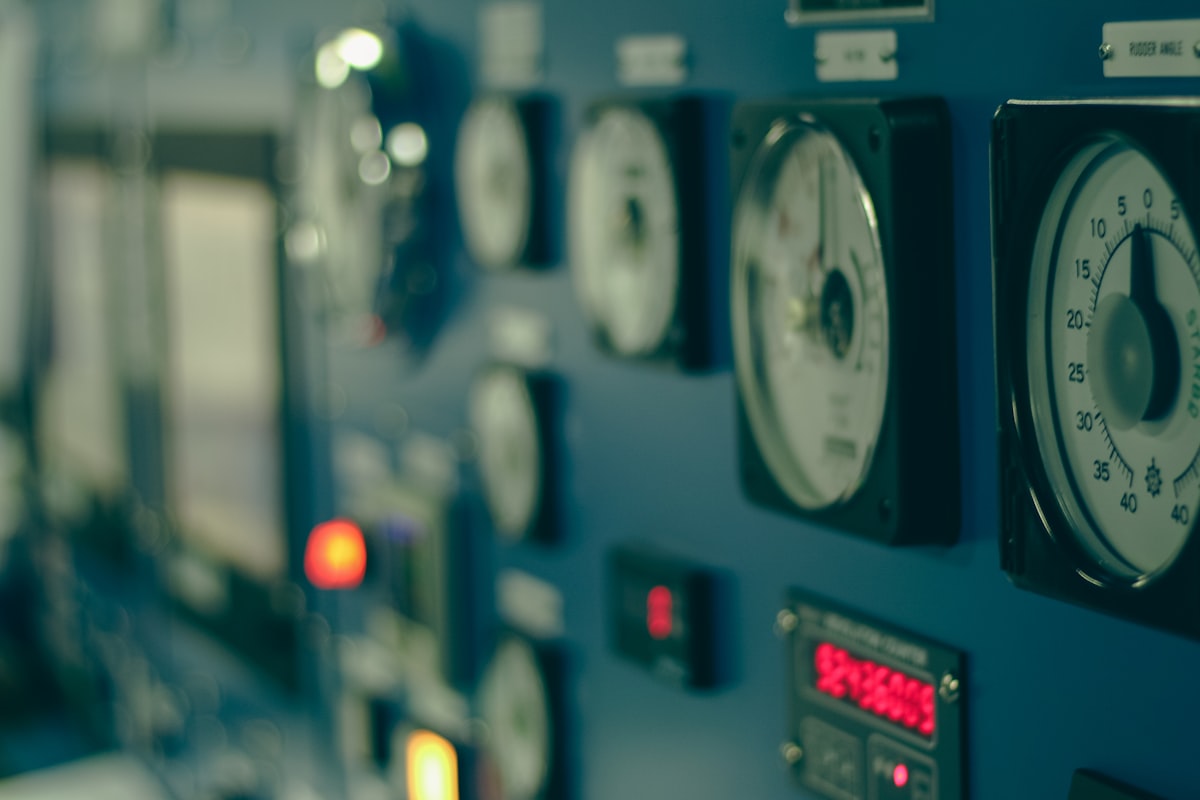
The choice is about the job the instrument does, not which is "better." A moving-coil analog meter under IEC 60051 [2] shows a needle an operator reads at a glance - trend and direction matter more than a precise figure, and it needs no power supply or communications. A digital meter like the Alpha series shows several parameters on one display, holds tighter accuracy, and can retransmit over Modbus to a PLC or SCADA.
| Aspect | Analog moving-coil | Digital (Alpha series) |
|---|---|---|
| Standard | IEC 60051 [2] | IEC 62053-22 for energy [4] |
| Reading | needle, at-a-glance trend | numeric, multi-parameter |
| Accuracy basis | % of full-scale deflection | % of measured value |
| Communications | none | Modbus / analogue retransmission |
| Best for | quick local indication | metering, logging, SCADA |
For a genset control panel where the operator watches load swing, an analog ammeter (IEC 60051) is often the better human-factors choice; for a main incomer that has to log energy and feed SCADA, a digital meter earns its place.
Accuracy Class Is Not One Number (IEC 60051)
The most common specification error is comparing accuracy classes across the analog/digital divide. IEC 60051 [2] rates analog instruments as a percentage of full-scale deflection, in classes 0.5, 1, 1.5, and 2.5. A Class 1.5 ammeter with a 0–100 A scale is accurate to ±1.5 A anywhere on the dial - which is ±1.5% at full scale but ±7.5% of the reading at a 20 A load. Digital meters and transducers are rated against the measured value, so their error does not balloon at part load.
| Device | Standard | Accuracy expressed as |
|---|---|---|
| Analog moving-coil meter | IEC 60051 [2] | % of full-scale deflection (class 0.5–2.5) |
| Transducer | IEC 60688 [3] | % of measured value (output span) |
| Digital energy meter | IEC 62053-22 [4] | % of measured value (class 0.2S–0.5S) |
| Metering CT | IEC 61869-2 [5] | % at rated current, within rated burden |
Switchboard indication is typically Class 1.5 analog - fine for "is the feeder loaded?" - but anything used for energy accounting belongs on a digital meter rated against the reading.
Transducers vs Meters Under IEC 60688
A meter displays; a transducer outputs. When a SCADA system or PLC needs an electrical quantity as a signal rather than a dial, the right device is a transducer - Sifam Tinsley's Omega series converts voltage, current, power, or power factor to an isolated 4–20 mA or 0–10 V output per IEC 60688 [3]. The isolation matters: it keeps the measured power circuit separate from the low-voltage control side. Specifying a panel meter and then expecting a retransmission signal off the back of it is the classic retrofit trap - the meter shows the value but cannot hand it to the SCADA.
Feeding a Revenue Meter: CTs Under IEC 62053-22
A digital energy meter is only as accurate as its current transformer. Sifam Tinsley's CT-60 wound-primary CTs are rated to IEC 61869-2 [5]; for revenue or check metering, specify a 0.2S or 0.5S class with the burden matched to the connected load - the same discipline the ESIT instrument-transformer guide sets out for ESIT CTs. The meter itself should be an IEC 62053-22 [4] class 0.5S static meter for tariff-grade energy - pairing a precise meter with a Class 1 CT throws the accuracy away at the transformer.
Common Mistakes Specifying to IEC 60051
The recurring errors under IEC 60051 come from specifying a class without its reference:
- A meter accuracy with no basis. Analog is % of full-scale deflection (IEC 60051 [2]); digital and transducers are % of measured value - the two numbers are not comparable, so the spec must say which.
- A transducer treated as a meter. A transducer outputs a signal per IEC 60688 [3]; it does not display. Name the function - indication or retransmission - and the device follows.
- A CT class with no burden. Per IEC 61869-2 [5], a CT's class only holds within its rated burden range; "0.5S" alone is incomplete.
- A precise meter on a loose CT. A 0.5S energy meter behind a Class 1 CT delivers Class 1 accuracy - match the chain, not just the meter.
- Inventing input ranges or output spans. Scale, range, and output come from the Sifam Tinsley datasheet for the model, not a generic assumption.
What to Specify When Enquiring
A Sifam Tinsley enquiry that quotes cleanly states:
- Function - local indication, energy metering, or a retransmission signal to SCADA
- Analog or digital - and, for analog, the IEC 60051 accuracy class against the application
- Measured quantity and range - voltage, current, power, frequency, or power factor, with the scale
- CT ratio and class - for current circuits, the CT-60 ratio, accuracy class, and rated burden
- Output - for a transducer, the 4–20 mA or 0–10 V span and isolation
- Mounting and standard - panel cut-out size and any marine, rail, or defence ruggedness requirement
Sourcing and Support in Pakistan
Pacific Engineering & Automation is the authorized Sifam Tinsley reseller in Pakistan. We supply the full range - analog moving-coil meters, Alpha digital meters, Omega transducers, precision shunts, selector switches, and CT-60 current transformers - and help match the instrument to its function, accuracy reference, and CT chain before build. Sifam Tinsley instruments sit alongside Ziegler switchboard meters, mount in Tempa Pano boards (see the LV distribution board guide), and read the CTs covered in the revenue-metering accuracy guide.
To specify a metering scheme for your switchboard, request a catalogue or quotation or contact our engineering team.
Field-derived case studies will be added to this post as Pacific Engineering & Automation accumulates engagement records. The current version is grounded in published specifications, regulatory documentation, and standards body references.
Sources
- Sifam Tinsley - official product portal
- IEC 60051-1:2016 - Direct acting indicating analogue electrical measuring instruments, Part 1: General requirements
- IEC 60688:2024 - Electrical measuring transducers for converting AC and DC quantities to analogue or digital signals
- IEC 62053-22:2020 - Static meters for AC active energy, classes 0.1S, 0.2S, 0.5S
- IEC 61869-2:2012 - Instrument transformers, Part 2: Additional requirements for current transformers
Pacific Engineering & Automation
Need industrial equipment in Pakistan?
Authorized dealer and reseller for 16 international manufacturers. Karachi-based, serving Pakistan since 1995.