Ziegler Accuracy Classes for Revenue Metering in Pakistan
How to specify Ziegler current transformer and energy meter accuracy classes - Class 0.2S, 0.5S, 1.0 - for revenue billing and industrial sub-metering in Pakistan.
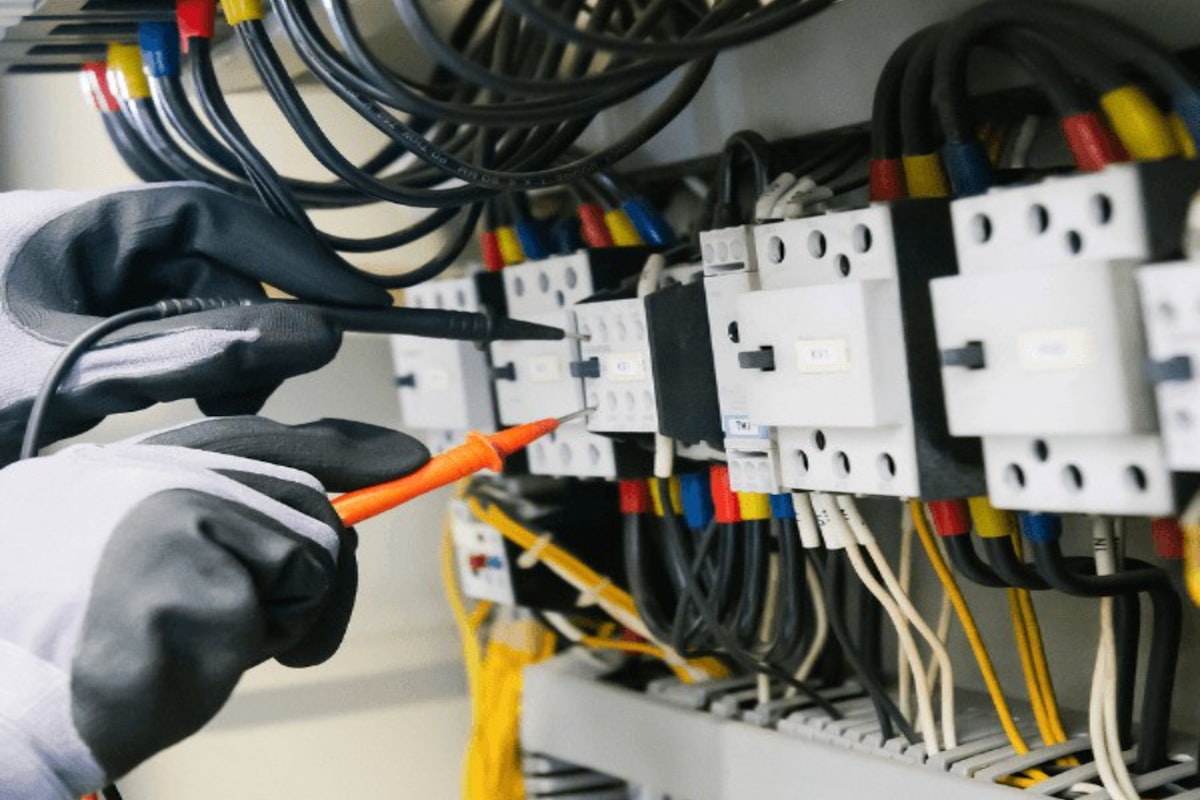
Revenue metering is where measurement becomes money. A current transformer feeding the billing meter at a 1 MW industrial connection passes roughly 1,400 amps continuously, and every percentage point of accuracy error compounds across a year of billed energy into real disputes with the DISCO.
For panel builders, switchboard OEMs, and industrial consumers in Pakistan, the accuracy class on instrument transformers and energy meters directly determines whether the installed chain will pass a tariff metering check and survive a billing dispute with the DISCO.
Ziegler manufactures switchboard measuring instruments - energy meters, panel meters, CTs, voltage transducers, power factor controllers - used in LV and MV switchgear across Pakistan. This guide walks through how to choose the right accuracy class for each component, and how the classes combine into a system-level accuracy that the meter check engineer actually verifies.
Where accuracy classes come from
Two IEC standards govern revenue-grade metering equipment:
- IEC 62053 defines energy meter accuracy classes: 0.2S, 0.5S, 1, 2. The "S" classes are specified in IEC 62053-22:2020 [1]; the standard accuracy classes (0.5, 1, 2) in IEC 62053-21:2020 [2].
- IEC 61869 (formerly IEC 60044) defines instrument transformer accuracy classes: 0.1, 0.2, 0.2S, 0.5, 0.5S, 1, 3, 5 for measurement; 5P, 10P for protection. General requirements are in IEC 61869-1:2023 [3]; the current-transformer specifics are in IEC 61869-2:2012 [4].
The numeric value is the percentage error at rated load - a Class 0.5 CT can introduce up to ±0.5% error at rated primary current. The "S" suffix (0.2S, 0.5S) is the important one for revenue work: it tightens the accuracy specification at low currents, down to 1% or even 0.5% of rated primary, where standard classes are allowed wider tolerances.
That low-current behaviour matters in Pakistan because industrial loads routinely run at 30–50% of installed transformer capacity off-shift, on weekends, and during gas-curtailment troughs. A non-"S" class CT can be in tolerance at full load and 2% off at 10% load - across a year of off-shift consumption, that 2% becomes the disputed bill.
Choosing the energy meter accuracy class
Ziegler's Energy Meter EM-96 is a DIN 96×96 panel-mount with RS485 Modbus for SCADA or BMS integration. When specifying:
- Class 2 - non-billing applications: building sub-metering, departmental tracking, internal cost allocation. Not acceptable for any tariff-billed connection.
- Class 1 - industrial sub-metering and process monitoring inside a plant boundary; common for production-line energy attribution and ISO 50001 reporting [5].
- Class 0.5S - primary metering on industrial connections, check meters against the DISCO meter, and any installation that must hold up in a billing dispute.
- Class 0.2S - utility-grade revenue metering at MV and HV connection points, and grid-tied metering for generation or wheeling arrangements.
Practical default for industrial primary metering: Class 0.5S or better. A Class 1 meter on a primary connection at 11 kV will not pass a utility check meter comparison, even if every other parameter is in spec.
Choosing the CT accuracy class
Ziegler's Current Transformer CT-5A is a wound measurement CT with 5 A secondary, used for panel metering. Three parameters matter beyond the accuracy class itself:
-
Burden (VA rating) - the combined load of the meter, connecting leads, and transducers on the CT secondary. Over-burdening pushes the CT out of its accuracy band. A typical panel meter draws 0.5–1 VA; 20–30 m of secondary cable adds another 1–2 VA. Specify a CT with burden at least equal to the installed load.
-
Ratio - primary to 5 A is standard in Pakistani panel work; 1 A secondary is preferred for long cable runs where reduced burden matters. For a 1,600 A main breaker, a 2000/5 ratio leaves headroom for inrush and short-circuit current without saturating the meter input.
-
ALF (Accuracy Limit Factor) - typically 5 or 10 for metering CTs. This is the multiple of rated primary current at which the CT saturates, protecting the meter from fault current. Do not confuse with protection CT limits (5P10, 10P20), which work the opposite way: protection CTs must not saturate until well above rated.
For revenue metering paired with a Class 0.5S meter, specify a Class 0.5S CT with burden matched to installed load.
System accuracy: the catch most panel builders miss
The largest procurement mistake in Pakistani panel work is treating meter and CT accuracy classes as independent. They are not.
A Class 0.5S meter fed by a Class 1 CT is, at the system level, a Class 1 measurement chain - class numbers do not multiply or average, they cascade with the weakest link setting the overall accuracy.
Practical rule: match or exceed. If the meter is Class 0.5S, the CTs must be Class 0.5S or better. If the meter is Class 0.2S, do not spend on it while installing Class 1 CTs at the same panel - the money buys accuracy the chain cannot deliver. The same rule applies to voltage transducers: Ziegler's VT-500 provides galvanically isolated analog output, and revenue-grade chains need a matched-accuracy voltage source on the metering bus.
Common procurement mistakes
- Specifying the meter class but not the CT class - a tendered BOQ that calls for "Class 0.5S energy meter" without specifying the CT class lets the lowest bidder install Class 1 or Class 3 CTs and technically meet the line item. The installed chain is Class 1 at best.
- Ignoring burden - buying a CT rated 5 VA for a panel with 7 VA of installed load. The CT runs out of its accuracy band at exactly the load condition the meter is sized to measure.
- Mixing metering and protection on a single CT core - acceptable on dual-core CTs (one Class 0.5S metering core, one 5P20 protection core); not acceptable on a single core, because the saturation requirements for metering and protection are directly contradictory.
- Forgetting cable resistance in the burden calculation - long secondary runs in small-gauge cable add VA the CT nameplate doesn't include. For 30+ metre runs, recalculate with actual cable resistance, run heavier cable, or switch to a 1 A secondary CT.
Sourcing and support in Pakistan
Pacific Engineering & Automation is the authorized Ziegler reseller in Pakistan. We supply the full Ziegler instrument range - panel meters, energy meters, power factor controllers, current transformers, voltage transducers, and power analyzers - with technical support on accuracy class selection, burden calculation, and panel-builder specifications from our Karachi office.
For datasheets, accuracy class verification on a specific Ziegler product, or to discuss a metering panel specification, request a catalogue or contact our engineering team.
Field-derived case studies will be added to this post as Pacific Engineering & Automation accumulates engagement records. The current version is grounded in published specifications, regulatory documentation, and standards body references.
Sources
- IEC 62053-22:2020 - Static meters for AC active energy, classes 0.1S, 0.2S, 0.5S (2nd ed.)
- IEC 62053-21:2020 - Static meters for AC active energy, classes 0.5, 1, 2 (2nd ed.)
- IEC 61869-1:2023 - Instrument transformers, Part 1: General requirements (2nd ed.)
- IEC 61869-2:2012 - Instrument transformers, Part 2: Additional requirements for current transformers (1st ed.)
- ISO 50001:2018 - Energy management systems - Requirements with guidance for use
Pacific Engineering & Automation
Need industrial equipment in Pakistan?
Authorized dealer and reseller for 16 international manufacturers. Karachi-based, serving Pakistan since 1995.