DGA Gas Ratios Explained: IEC 60599 Ratios and the Duval Triangle
How DGA gas ratios turn ppm into a diagnosis: the three IEC 60599 ratios and their fault-type limits, the Duval Triangle 1 zones, the older Rogers method, and where ratio methods break down.
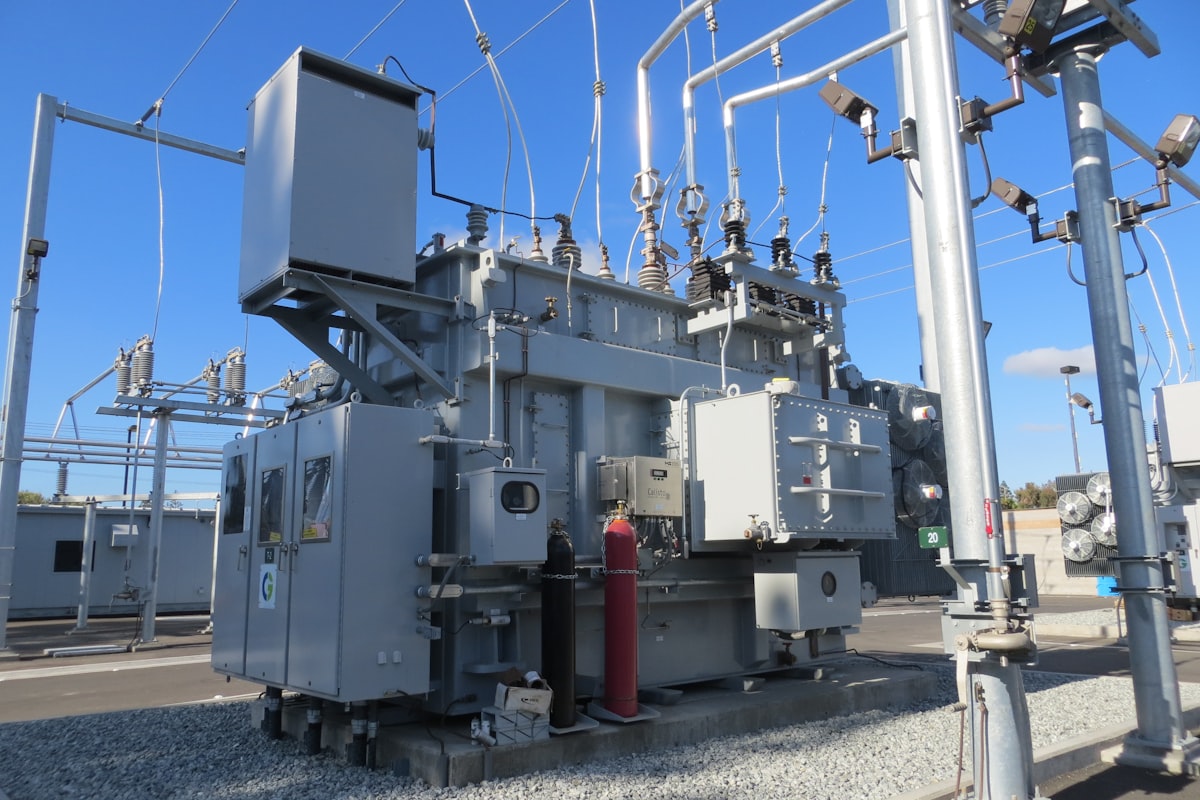
Two transformers can show the same 200 ppm of ethylene and have nothing in common: one is a 30-year-old unit with a large oil volume and a mild hot spot, the other a young unit with a developing high-temperature fault. Concentrations alone cannot tell them apart. Dissolved gas analysis (DGA) gets its diagnostic power from ratios - and IEC 60599 defines three of them, with fault-type limits for each [1].
This is the interpretation layer beneath the transformer DGA fault gases guide: the three IEC ratios and their limits, the Duval Triangle 1 zones, the older Rogers method, and the situations where ratio methods mislead. Camlin monitors compute all of it continuously [3]; this post covers what the numbers mean.
Why Ratios, Not Concentrations (IEC 60599)
A ratio cancels the oil volume. Each fault type generates gases in characteristic proportions because each gas needs a different energy level to form, so the proportion between two gases identifies the fault even when the absolute ppm depends on how much oil dilutes it [1]. IEC 60599 builds its interpretation on three ratios - C₂H₂/C₂H₄, CH₄/H₂, and C₂H₄/C₂H₆ - and assigns each of its six fault categories a band for every ratio [1]. The method applies only once gas levels exceed typical values; ratios computed on background-level gases are noise dressed as diagnosis.
The 3 IEC 60599 Ratios and Their Fault Limits
The basic gas-ratio interpretation table [1] (NS = not significant):
| Fault | C₂H₂/C₂H₄ | CH₄/H₂ | C₂H₄/C₂H₆ |
|---|---|---|---|
| PD - partial discharge | NS | <0.1 | <0.2 |
| D1 - low-energy discharge | >1 | 0.1 to 0.5 | >1 |
| D2 - high-energy discharge (arcing) | 0.6 to 2.5 | 0.1 to 1 | >2 |
| T1 - thermal, below 300 °C | NS | >1 | <1 |
| T2 - thermal, 300 °C to 700 °C | <0.1 | >1 | 1 to 4 |
| T3 - thermal, above 700 °C | <0.2 | >1 | >4 |
Each ratio answers one question. C₂H₂/C₂H₄ asks whether there is arc-level energy: acetylene needs it, ethylene does not, so a ratio above 0.6 points at discharges. CH₄/H₂ separates partial discharge from everything else: PD makes hydrogen with almost no methane, so the ratio sits below 0.1 only for PD. C₂H₄/C₂H₆ grades thermal severity: ethane forms at low temperature and ethylene at high, so the ratio climbs from below 1 (T1) through 1 to 4 (T2) to above 4 (T3) [1].
Reading the Table: 4 Patterns
- Hydrogen high, methane low, acetylene absent. CH₄/H₂ below 0.1 with no C₂H₂ is the PD signature [1] - the fault is electrical but low-energy.
- Acetylene dominant. C₂H₂/C₂H₄ above 1 with CH₄/H₂ between 0.1 and 0.5 reads D1; 0.6 to 2.5 with CH₄/H₂ up to 1 and C₂H₄/C₂H₆ above 2 reads D2 arcing [1].
- Methane above hydrogen, ethylene climbing. CH₄/H₂ above 1 says thermal; C₂H₄/C₂H₆ then places the temperature tier [1].
- Ratios fall between bands. The standard's scheme is not exhaustive; a sample that fits no row is a prompt to trend and resample, not to force a label [1].
Duval Triangle 1: 7 Zones From 3 Gases
The Duval Triangle uses the relative percentages of three gases - CH₄, C₂H₄, and C₂H₂ - as triangular coordinates, and divides the plane into seven zones: PD, D1, D2, T1, T2, T3, and DT for mixed thermal-electrical faults [1]. The thermal tiers are split by the ethylene share - T1 below 20% C₂H₄, T2 from 20% to 50%, T3 above 50% - and the D1/D2 boundary sits at 23% C₂H₄ within the high-acetylene region; PD occupies the sliver at the methane apex [1]. The triangle's defining property cuts both ways: every point lands in a zone, so it always returns a diagnosis, which is why it must only be applied to samples whose gases are genuinely above typical levels.
Rogers Ratios: The Older IEEE Method
The Rogers method, carried in IEEE C57.104-2008, used the same three ratios in coded cases - for example CH₄/H₂ above 1 with C₂H₄/C₂H₆ above 3 for thermal faults above 700 °C [2]. The 2019 revision of C57.104 reorganised the ratio methods and put its emphasis on the Duval Triangle together with the new population-derived concentration norms [2]. Engineers still meet Rogers codes in older reports; the IEC table above is the current reference, and where the two disagree, the disagreement itself is a reason to resample.
Common Interpretation Mistakes
The 5 recurring errors when applying IEC 60599 ratios:
- Ratios on background gas. Below typical concentration levels the proportions are measurement noise [1]; check the levels before computing anything.
- Reading "NS" as a limit. Not significant means the ratio does not discriminate for that fault [1], not that it must be small.
- Forgetting the carbon oxides. CO and CO₂ appear in none of the three ratios; paper degradation is diagnosed separately via the CO₂/CO ratio [1].
- Diagnosing one sample. CIGRE TB 296 documents how single-point interpretation misleads [4]; the ratios' trend across samples is the diagnosis.
- Ratios contaminated by tap-changer gas. Where the OLTC compartment communicates with the main tank, its switching acetylene corrupts C₂H₂/C₂H₄ [1]; IEC 60599 treats OLTCs separately, with their own Duval Triangle.
Where Online Monitoring Fits
A laboratory ratio is one point; an online monitor draws the curve. Camlin's TOTUS units measure the fault gases continuously and the TOTUSPRO software computes the ratios and Duval position on every reading [3], so a D1 signature developing over a fortnight shows as a track across the triangle rather than a surprise at the next annual sample. The DGA alarm limits and trending guide covers how those readings turn into defensible alarms.
Sourcing and Support in Pakistan
Pacific Engineering & Automation is the authorized Camlin reseller in Pakistan, supplying the TOTUS G5 and G9 monitors for transmission, K-Electric, DISCO, and IPP transformer fleets - with interpretation support that starts from IEC 60599's ratios, not from a vendor's colour code.
To put continuous ratio interpretation on a critical transformer, request a catalogue or quotation or contact our engineering team.
Field-derived case studies will be added to this post as Pacific Engineering & Automation accumulates engagement records. The current version is grounded in published specifications, regulatory documentation, and standards body references.
Sources
- IEC 60599:2022 - Mineral oil-filled electrical equipment in service, guidance on the interpretation of dissolved and free gases analysis (4th ed.)
- IEEE C57.104-2019 - IEEE Guide for the Interpretation of Gases Generated in Mineral Oil-Immersed Transformers
- Camlin Energy - Transformer Monitoring - TOTUS monitors and TOTUSPRO diagnostics
- CIGRE Technical Brochure 296 - Recent developments on the interpretation of dissolved gas analysis in transformers
Pacific Engineering & Automation
Need industrial equipment in Pakistan?
Authorized dealer and reseller for 16 international manufacturers. Karachi-based, serving Pakistan since 1995.