ATEX Zones for Explosion-Proof Enclosures in Pakistani Refineries
How to specify Alloy Industry explosion-proof enclosures for ATEX Zone 1 and Zone 2 hazardous areas in Pakistani refineries - IEC 60079-0, IEC 60079-1, and IEC 60079-14 selection guide.
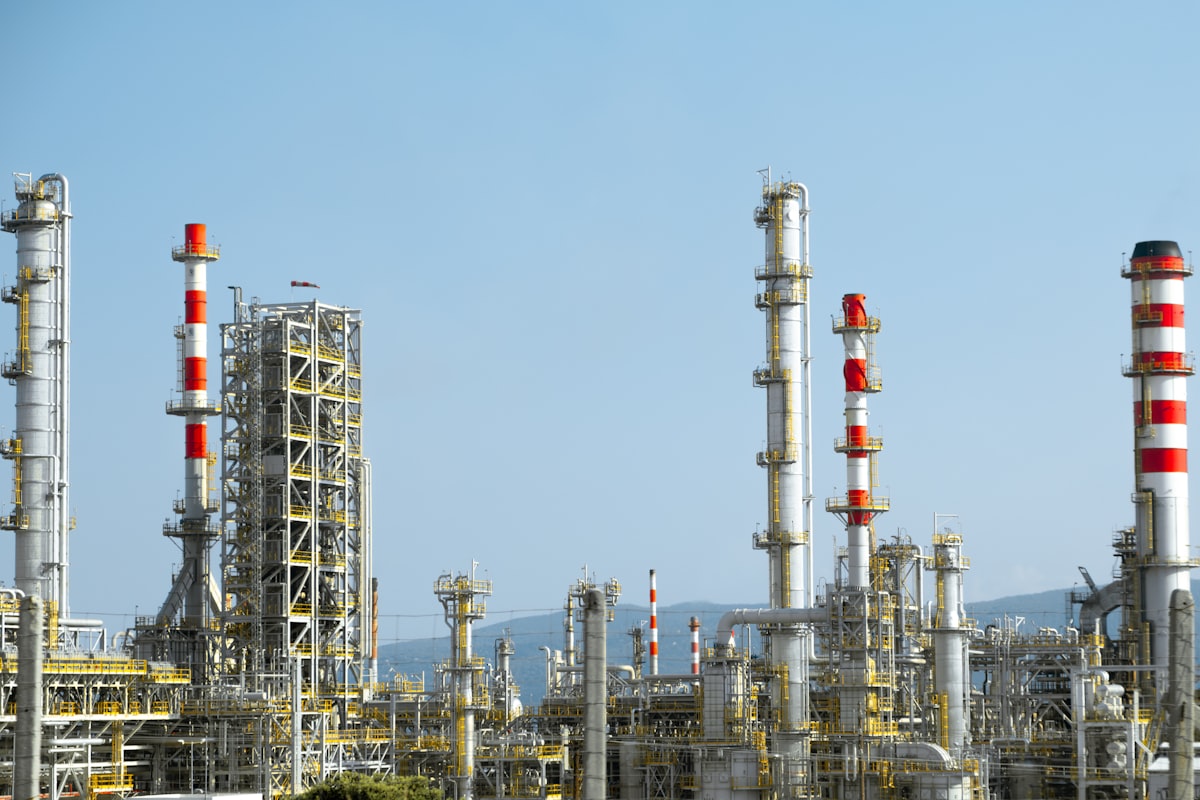
A loose terminal inside the wrong junction box at PARCO's hydrocracker can ignite a hydrogen-rich atmosphere from a single 1 mJ spark. Most installation problems trace back to the moment someone specified a Zone 2 enclosure for a Zone 1 area, or signed off an IIB-rated control station in a hydrogen service.
For Pakistani refineries, petrochemical plants, and gas processing terminals, hazardous-area electrical specification runs through IEC 60079 [2] and the ATEX directive its harmonised standards underpin [4]. This guide covers how to select Alloy Industry explosion-proof enclosures against the zone and gas-group framework that governs every Pakistani refinery's E&I specification.
What ATEX zones actually mean
IEC 60079-10-1 [3] defines three zones for explosive gas atmospheres by frequency of presence:
- Zone 0 - explosive gas atmosphere present continuously or for long periods. Inside vessels, mixing tanks, sumps; on the surface of stored flammable liquids.
- Zone 1 - likely to occur in normal operation. Around pump seals, sample points, vent stacks, routinely-opened process connections.
- Zone 2 - unlikely in normal operation and, if present, only briefly. Most of an outdoor process area; secondary zones around Zone 1 sources.
Dust atmospheres get a parallel classification - Zone 20, 21, 22 - under IEC 60079-10-2. The area-classification drawing is the responsibility of the facility's process safety engineer, not Pacific; we supply equipment to match an already-classified site.
ATEX vs IECEx: which does Pakistan need?
Both schemes test against the same IEC standards but route certification differently [4]:
- ATEX is the EU's mandatory directive, CE-marked, with the manufacturer accountable for compliance. Its category structure (1/2/3 for gas) maps directly to zone usage.
- IECEx is the voluntary international scheme operated under the IEC, third-party certified, accepted in ~35 countries including most Asian and Middle Eastern markets.
For Pakistani projects, IECEx is the simpler default - accepted by every major refinery and EPC contractor. Some European parent-company specs require ATEX; Alloy Industry typically provides both, and the certificate number must be verified on the specific supplied product.
Zone 1 vs Zone 2 in practice
The procurement rule is one-directional: equipment certified for a more onerous zone can be used in a less onerous zone, never the reverse [5].
- Zone 1 equipment uses one of several IEC 60079 protection concepts: flameproof "d" (IEC 60079-1) [6], increased safety "e", intrinsic safety "ia"/"ib", encapsulation "m", or pressurised "px". Alloy Industry's JBE, TBE, and DJB enclosure series target Zone 1 with flameproof "d" [1].
- Zone 2 equipment can use the simpler "n" concept (IEC 60079-15) or any Zone 1 method. Most Zone 2 areas use dual-certified equipment since the price delta is small.
A Zone 1 enclosure in Zone 2 is compliant but overspecified. A Zone 2 enclosure in Zone 1 is a fundamental safety violation - and the refinery HSE audit will find it.
Gas group IIB vs IIC: when does a Pakistani refinery need IIC?
IEC 60079-0 [2] divides gas atmospheres into three groups by ignitability:
- Group IIA - methane, propane, most light hydrocarbons.
- Group IIB - ethylene, town gas, most refinery process streams.
- Group IIC - hydrogen, acetylene, carbon disulphide. The hardest to contain because the minimum ignition energy is lowest.
For a Pakistani refinery: hydrocrackers, hydrotreaters, hydrogen plants, and any unit handling H₂ recycle need IIC-rated equipment. General hydrocarbon process areas (atmospheric distillation, vacuum distillation, FCC) typically need IIB. IIC equipment can be used in IIB/IIA areas; IIB cannot be used in IIC. Default to IIC where the gas group is not formally characterised; de-rate to IIB where the area-classification drawing supports it.
Selecting Alloy Industry equipment by zone
Pacific's Alloy Industry catalogue maps to a typical Pakistani refinery as follows:
| Application | Zone | Alloy Industry product family |
|---|---|---|
| Junction boxes (cable consolidation, instrument loops) | Zone 1, IIB/IIC | JBE / TBE / JBE2 / TBE2 flameproof enclosures [1] |
| Empty enclosures for custom panel build-up | Zone 1 or 2 | DJB / DER / WJB series |
| Field control stations (start/stop, ESD, local-remote) | Zone 1 | EPB / DCU / DCT / DCR push-button series |
| Energised disconnect at maintenance points | Zone 1 | ESN snap switches; DCR3-CB / DRCS / DPG interlocked plugs |
| Process lighting (high-bay, floodlight, tank light) | Zone 1 or 2 | DNGV / DFP / DFPE / DFDR2 / DFXT fixtures |
| Cable entry at any of the above | matched to enclosure | DAC / DNA / DNAF cable glands, barrier glands, sealing fittings |
Cable entry is where most field installations fail Ex inspection. Unsealed glands turn a flameproof enclosure into an open one. IEC 60079-14 [5] specifies cable-entry rules - barrier or compound-filled glands are mandatory where flammable gas can migrate through the cable interstices.
Common specification pitfalls
Procurement errors on hazardous-area projects cluster in five places:
- Specifying "explosion-proof" without naming the protection concept. Flameproof "d", increased safety "e", and intrinsic safety "i" are not interchangeable - each has its own installation rules under IEC 60079-14 [5]. Name the concept on the BOQ.
- Treating the certificate as brand-wide. Certificates are per-product-per-batch, not per-manufacturer. Verify the certificate number against the specific Pacific-supplied unit.
- Mismatching gas group to area. A IIB-certified control station in a hydrogen unit is non-compliant regardless of how recently it was installed.
- Omitting cable-entry seals. Bare cable glands defeat the enclosure's protection at the interstice. IEC 60079-14 [5] specifies when barrier or compound seals are mandatory.
- Forgetting that grounding and surge protection still apply. Ex equipment does not exempt the installation from equipotential bonding or transient overvoltage protection - see the grounding and lightning protection guide for Pakistani industrial sites and the CITEL surge protection tiers guide.
Sourcing and support in Pakistan
Pacific Engineering & Automation is the authorized Alloy Industry reseller in Pakistan. We supply the full Alloy Industry hazardous-area range - explosion-proof enclosures, junction and terminal boxes, cable glands and conduit fittings, control stations, interlocked switches and plugs, and Ex-rated lighting fixtures - with technical support on zone selection, gas-group matching, and IEC 60079 conformance from our Karachi office. Alloy Industry pairs with Kumwell grounding systems and CITEL surge protective devices for complete hazardous-area electrical infrastructure.
For a hazardous-area equipment specification or product quotation, request a catalogue or contact our engineering team.
Field-derived case studies will be added to this post as Pacific Engineering & Automation accumulates engagement records. The current version is grounded in published specifications, regulatory documentation, and standards body references.
Sources
- Alloy Industry - official product portal
- IEC 60079-0:2017 - Explosive atmospheres, Part 0: Equipment, General requirements (7th ed.)
- IEC 60079-10-1:2020 - Classification of areas, Explosive gas atmospheres (3rd ed.)
- ATEX vs IECEx - Industry comparison on regulatory scope, certification routes, and global acceptance
- IEC 60079-14:2024 - Electrical installation design, selection, and installation of equipment (6th ed.)
- IEC 60079-1:2014 - Equipment protection by flameproof enclosures "d" (7th ed.)
- PARCO - Pak-Arab Refinery Limited corporate website
- PRL - Pakistan Refinery Limited corporate website
Pacific Engineering & Automation
Need industrial equipment in Pakistan?
Authorized dealer and reseller for 16 international manufacturers. Karachi-based, serving Pakistan since 1995.