Underground Cable Fault Location for Pakistani DISCO Networks
How K-Electric and Pakistani DISCOs locate underground cable faults on 11 kV and 33 kV feeders using TDR, arc reflection, and impulse-current pre-location methods.
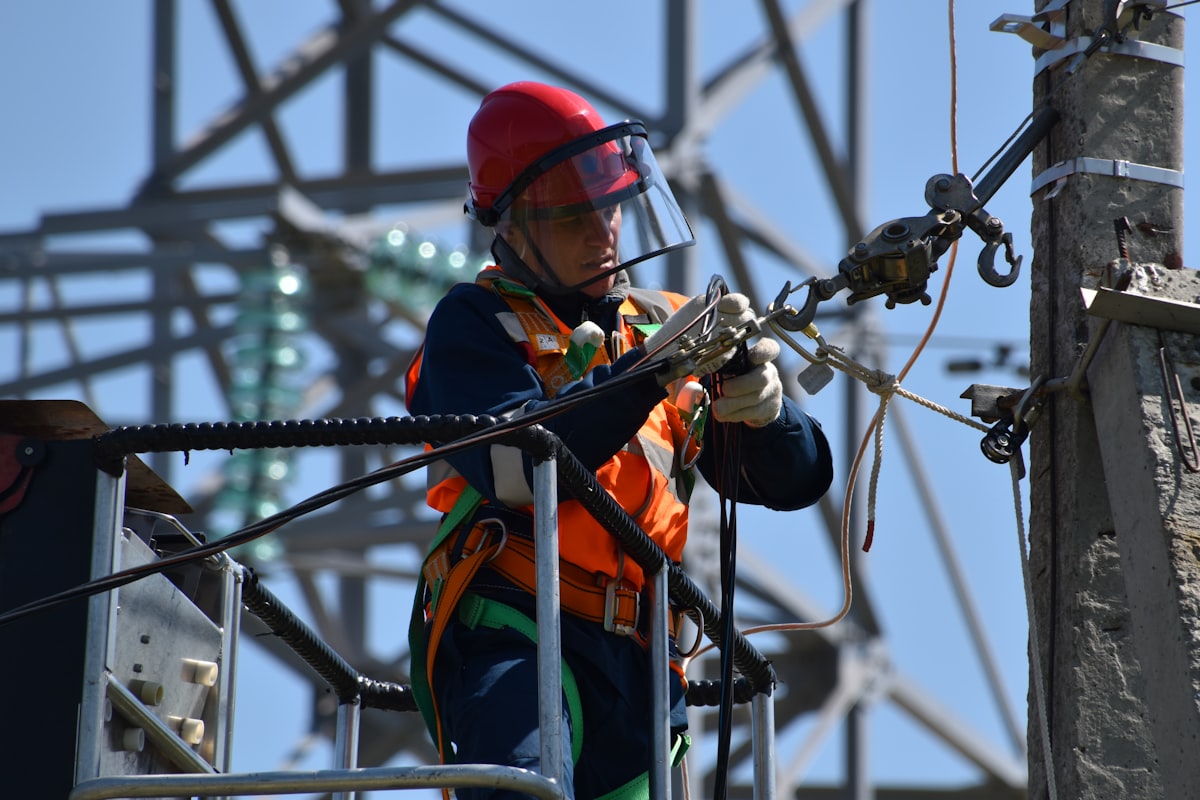
A single fault on an 11 kV underground feeder in a K-Electric or DISCO network strands hundreds of consumers until the cable is repaired. Repair is usually quick; what takes hours or days is finding where on the buried cable the fault sits. Every hour the dig crew spends guessing is outage on the meter, complaints at the call centre, and a SAIDI number NEPRA's distribution code tracks against the licence [6].
Locate-time is the lever. Xi'an Huapu builds the testing vans, trolleys, and portable units Pakistani utilities use to convert a six-hour visual hunt into a forty-minute instrumented pre-location. This guide walks through how the methods fit together, when to pick which Xi'an Huapu unit, and the procurement traps to avoid.
Why locating the fault is the slow step
Underground MV cable is buried 0.8–1.2 m under road surface, with joints every few hundred metres. When the protection relay trips and locks out - see the SEG protection-relay guide for distribution transformers for the upstream side - the operator knows a fault has occurred somewhere on the feeder. Without instrumented location, the only option is test-energising sections by progressively switching - slow, hard on the cable, dangerous if the fault is intermittent. Instrumented location compresses this to two steps: pre-location (distance from a measurement end) and pinpointing (exact dig spot).
Cable fault location methods (and when each one fits)
Three pre-location methods cover almost every real fault on a Pakistani distribution feeder [2][4]:
- Time-domain reflectometry (TDR). A ~50 V pulse is launched into the cable; impedance-change reflections return as a distance-marked trace. Fast and low-stress, accurate to ±1–3% with the right velocity factor. Catches low-resistance faults and breaks; high-resistance faults reflect too weakly for a low-voltage pulse and need the HV methods below [5].
- Arc reflection method (ARM). An HV surge generator fires through a filter, ionising the fault into a brief arc. While alive, the arc looks like a dead short to a simultaneous TDR pulse, and the trace shows fault distance against the cable's landmarks [4]. The workhorse for the high-R faults that dominate aged Pakistani DISCO cable networks.
- Impulse-current method (ICM, or surge/decay). When ARM does not give a clean trace - long cables, very high-R faults, flashing faults - the surge fires, the cable breaks down at the fault, and the travelling current wave's transit time gives the distance.
Before any fault work begins on an undocumented DISCO network, an audio-frequency transmitter and portable receiver trace the cable route and depth above ground - the prerequisite step many crews skip and then dig blind.
TDR vs arc reflection vs impulse current: how to choose
A practical decision sequence for a Pakistani feeder fault:
- Try TDR first - fastest, and immediately tells you whether it is a low-R fault, a break, or a high-R fault that needs HV methods.
- If TDR shows nothing useful, switch to ARM at a surge voltage matched to the cable rating (typically 16–32 kV for 11 kV XLPE). Best readable trace for high-R faults with clear joint/landmark patterns.
- If ARM cannot resolve, go to ICM - long cables and flashing faults often only give up under direct surge.
Cable condition matters: repeated HV surges can convert a recoverable fault into a permanent one. Use the lowest surge voltage that reliably produces the arc, not the highest the generator can deliver [4].
Pinpointing the dig spot
Pre-location reduces an 800 m feeder search to a 5–20 m zone. Pinpointing closes that to spade-width. The standard method: fire the HV surge at intervals so the fault arcs audibly underground, while a technician walks the zone with an acoustic probe and EM frame antenna. Acoustic peaks directly above the fault; EM confirms via surge current direction. Without pinpointing, pre-location often misses by several metres - enough to dig the wrong patch and start again.
Picking the right Xi'an Huapu unit
The right pick is a function of fault-finding throughput [1]:
- HP-A40 testing van - vehicle-mounted, integrated platform with pre-location, pinpointing, route detection, identification, and safety piercing. The DISCO answer for a permanent fault-location crew across a city network.
- HP-A50 trolley - compact trolley with test, HV supply, multi-pulse generation, and pinpointing. For a smaller DISCO area office or contractor without a dedicated van.
- HP-A30 portable multi-pulse tester - handheld, low-voltage pulse + impulse current + multi-pulse. For industrial in-house teams handling the occasional fault on their own MV distribution.
- HP-G35 surge generator - when an existing TDR is on hand and only the HV side is missing. Up to 32 kV DC for 11 kV and 22 kV XLPE.
- HP-R30 underground cable & pipeline detector - route tracing, depth, and live/de-energised identification before any fault work.
For diagnostic field testing between fault events, IEEE 400-2012 [2] is the umbrella guide; IEC 60270:2025 [3] covers PD measurement when fault-finding extends into joint and termination assessment.
Common cable fault location mistakes
- Wrong velocity factor. TDR distance = pulse travel time × velocity factor; XLPE differs from PILC. A default 50 % factor on a cable that's actually 56 % puts a 600 m fault at 535 m on the trace - 65 m off, far outside the pinpointing window.
- Skipping pinpointing after pre-location. Pre-location is necessary, never sufficient. Crews that dig on pre-location alone often miss by 3–8 m on long or jointed runs.
- Surging at maximum voltage on aged cable. The first cable energisation after a fault can be the last; use the lowest surge voltage that reliably produces an arc.
- No PPE and safety distance during HV operation. The surge generator and the arc both create real shock and arc-flash hazards; the test van's safety monitoring exists for a reason.
- Treating NEPRA's outage metrics as a reporting concern, not a procurement one. Faster fault location directly improves SAIDI/SAIFI numbers tracked under the NEPRA Distribution Code [6]; equipment that cuts mean locate-time pays back through licence-compliance margin, not just labour.
Sourcing and support in Pakistan
Pacific Engineering & Automation is the authorized Xi'an Huapu reseller in Pakistan. We supply the full range - vans, trolleys, portable testers, surge generators, and route/pipeline detectors - with technical support on method selection, velocity-factor calibration, and operator training from our Karachi office.
For a quotation, request a catalogue or contact our engineering team.
Field-derived case studies will be added to this post as Pacific Engineering & Automation accumulates engagement records. The current version is grounded in published specifications, regulatory documentation, and standards body references.
Sources
- Xi'an Huapu Electric Power Ltd - official product portal (HP-A40, HP-A50, HP-A30, HP-G35, HP-R30)
- IEEE 400-2012 - IEEE Guide for Field Testing and Evaluation of the Insulation of Shielded Power Cable Systems Rated 5 kV and Above
- IEC 60270:2025 - High-voltage test techniques, Charge-based partial discharge measurements (4th ed.)
- Electric Energy Online - Underground Cable Fault Locating Using the Arc Reflection Method
- IEEE 1234-2019 - IEEE Guide for Fault-Locating Techniques on Shielded Power Cable Systems (fault characterization and TDR limits)
- NEPRA Distribution Code 2005 - Pakistan regulatory framework (PDF)
Pacific Engineering & Automation
Need industrial equipment in Pakistan?
Authorized dealer and reseller for 16 international manufacturers. Karachi-based, serving Pakistan since 1995.