YTVOX Explosion-Proof Telephones for Pakistani Refineries
How to specify YTVOX explosion-proof telephones for Pakistani refineries and gas plants - reading the Ex db ib IIC T6 Gb mark under IEC 60079, matching zones and EPLs, and choosing analogue or SIP.
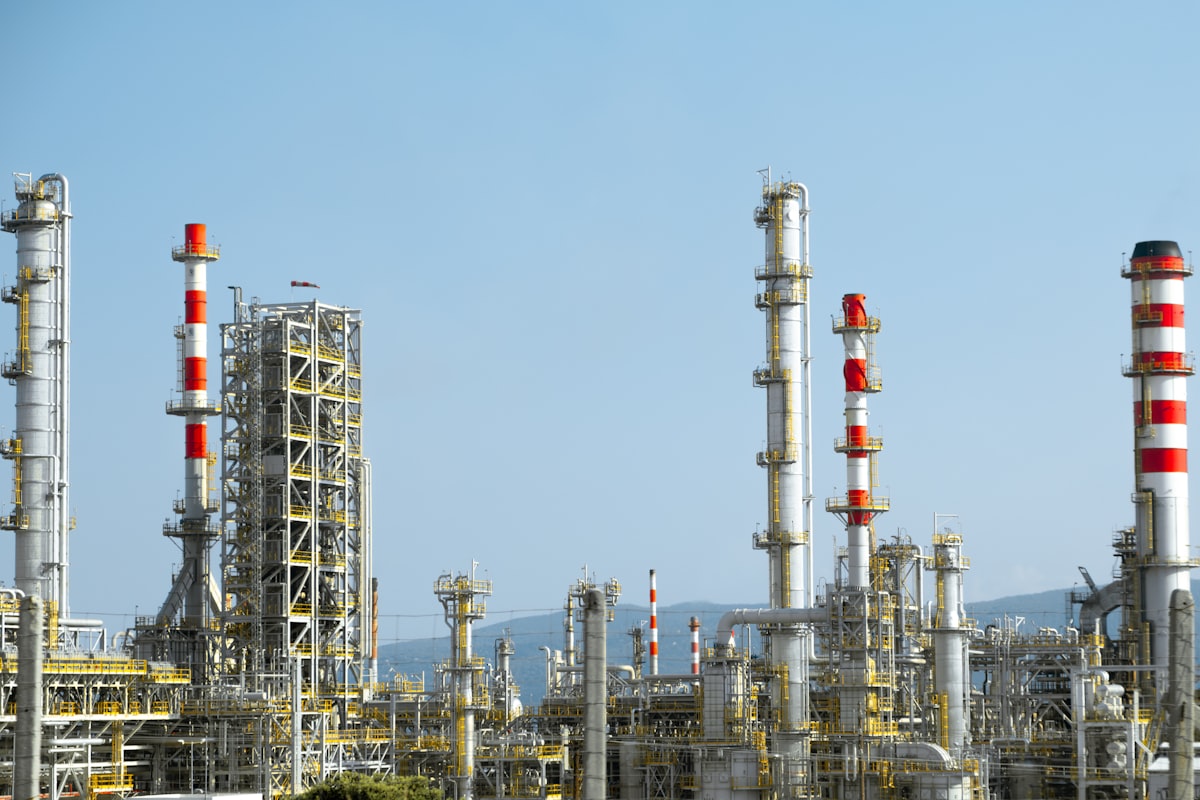
A standard telephone in a Zone 1 gas area is an ignition source with a dial pad. Its ringer contacts spark, its handset coil stores energy, and neither was ever assessed against a flammable atmosphere. That is why hazardous-area communication is specified from the certificate, not the catalogue photo - and why the string on the nameplate, something like Ex db ib IIC T6 Gb, is the entire specification in one line.
YTVOX's YTEX telephones carry exactly that marking, in an IP66–IP67 die-cast aluminium body, in analogue and SIP/VoIP versions [1]. This guide decodes the Ex mark under IEC 60079, matches it to the zones on a Pakistani refinery's area-classification drawing, and covers what else the specification has to say.
Reading the Ex Mark (IEC 60079)
IEC 60079-0 [2] defines the marking scheme; each field is a separate, testable commitment. Taking the YTEX gas-atmosphere mark Ex db ib IIC T6 Gb apart:
| Field | Value | What it commits to |
|---|---|---|
| Protection concept | db | flameproof enclosure - contains an internal ignition (IEC 60079-1 [3]) |
| Second concept | ib | intrinsic safety on protected circuits |
| Gas group | IIC | the hardest group - hydrogen and acetylene atmospheres |
| Temperature class | T6 | surface stays below 85 °C |
| Equipment protection level | Gb | high protection - suitable for Zone 1 |
The companion dust mark - Ex tb ib IIIC T80 °C Db on the YTEX [1] - makes the same commitments for combustible-dust atmospheres. Every field must match the site: a IIB-rated device is not lawful in a hydrogen (IIC) area, and a T4 device is not lawful where the gas ignites below its surface-temperature limit.
Zones and What They Permit
The area-classification drawing divides the plant by how often a flammable atmosphere is present, and IEC 60079-0 [2] maps each zone to the equipment protection level (EPL) it requires:
| Zone | Atmosphere present | EPL required | YTEX (Gb) permitted? |
|---|---|---|---|
| Zone 0 | continuously or long periods | Ga | no |
| Zone 1 | likely in normal operation | Gb | yes |
| Zone 2 | unlikely, short-lived | Gc | yes |
A Gb-rated telephone covers Zone 1 and Zone 2 - the process areas, pump rows, and loading gantries where refinery communication actually lives. Zone 0 (inside vessels and tanks) is no place for a telephone at all. The specification flows one way: read the zone and gas group off the classification drawing, then require the matching EPL, group, and temperature class on the certificate.
IP Rating and the Refinery Environment (IEC 60529)
The Ex mark handles ignition; it says nothing about weather. A refinery telephone also lives with hose-downs, dust, salt air at coastal sites, and 45 °C summers - which is what the IP code under IEC 60529 [4] covers. The YTEX's IP66–IP67 rating means dust-tight with protection against powerful jets and temporary immersion, and its die-cast aluminium body carries the corrosion duty [1]. Specify both ratings independently: an Ex certificate with a weak IP rating fails in the field, and a rugged IP66 body without the Ex mark is unlawful in the zone.
Analogue or SIP Behind the Barrier
The YTEX line runs both signalling families [1]. Analogue keeps the telephone on a plant PABX pair - simple, long-line tolerant, and familiar to existing refinery telecom. SIP/VoIP puts the telephone on the plant network, where a YTVOX YT-ICS server adds group calls, zone broadcast, and alarm linkage across the site's intercom and PA fleet [1]. The choice is an integration decision, not a safety one - both variants carry the same Ex certification, and the specification should name the signalling, the server or PABX it lands on, and the cable route through the hazardous area.
Common Specification Mistakes
The recurring errors under IEC 60079 all shortcut the certificate:
- Treating a label as a certificate. "Explosion-proof" in a catalogue is a claim; the IEC 60079 [2] certificate with concept, group, temperature class, and EPL is the evidence. Require the certificate number.
- Matching the zone but not the gas group. A Zone 1 device at IIB does not cover a IIC (hydrogen) area - group and zone are independent checks.
- Ignoring the temperature class. T6 (85 °C) covers almost all gases; a T4 device may not, if the site's gas has a lower auto-ignition temperature.
- Forgetting the dust mark. Grain, fertiliser, and coal-handling areas classify under dust zones - the device needs the IIIC dust marking [2], not just the gas one.
- Specifying Ex without IP. The atmosphere rating and the IEC 60529 [4] ingress rating are separate duties; a refinery telephone needs both stated.
What to Specify When Enquiring
A hazardous-area telephone enquiry that quotes cleanly against IEC 60079 states:
- Zone and gas group - from the area-classification drawing (e.g. Zone 1, IIC)
- Temperature class - from the site's gas list (T6 covers the widest range)
- Dust marking - where combustible dust classifies the area (IIIC, Db)
- IP rating - IP66–IP67 per IEC 60529 for washdown and weather exposure
- Signalling - analogue to the PABX, or SIP to a YT-ICS server, with the cable route
- Mounting and accessories - pillar, wall, acoustic hood, and beacon options
Sourcing and Support in Pakistan
Pacific Engineering & Automation is the authorized YTVOX reseller in Pakistan. We supply the YTEX explosion-proof range alongside the weatherproof YT200/YT300 telephones, YT500 help points, and the YT-ICS SIP server, and help match the Ex mark, IP rating, and signalling to the area-classification drawing before the enquiry goes out. The same hazardous-area discipline applies to enclosures and fittings - the ATEX zones guide for Pakistani refineries covers that side with Alloy Industry's Ex range.
To specify hazardous-area communication for your site, request a catalogue or quotation or contact our engineering team.
Field-derived case studies will be added to this post as Pacific Engineering & Automation accumulates engagement records. The current version is grounded in published specifications, regulatory documentation, and standards body references.
Sources
- YTVOX Technology Ltd - official product portal
- IEC 60079-0:2017 - Explosive atmospheres, Part 0: Equipment - General requirements
- IEC 60079-1:2014 - Explosive atmospheres, Part 1: Equipment protection by flameproof enclosures "d"
- IEC 60529 - Degrees of protection provided by enclosures (IP Code)
Pacific Engineering & Automation
Need industrial equipment in Pakistan?
Authorized dealer and reseller for 16 international manufacturers. Karachi-based, serving Pakistan since 1995.