SEG Protection Relays for Pakistani Distribution Transformers
How to specify SEG MRI3 and WIC1 g2 protection relays for 11 kV and 33 kV distribution transformers in Pakistan - IEC 60255-151 overcurrent and 50/51/50N/51N device coverage.
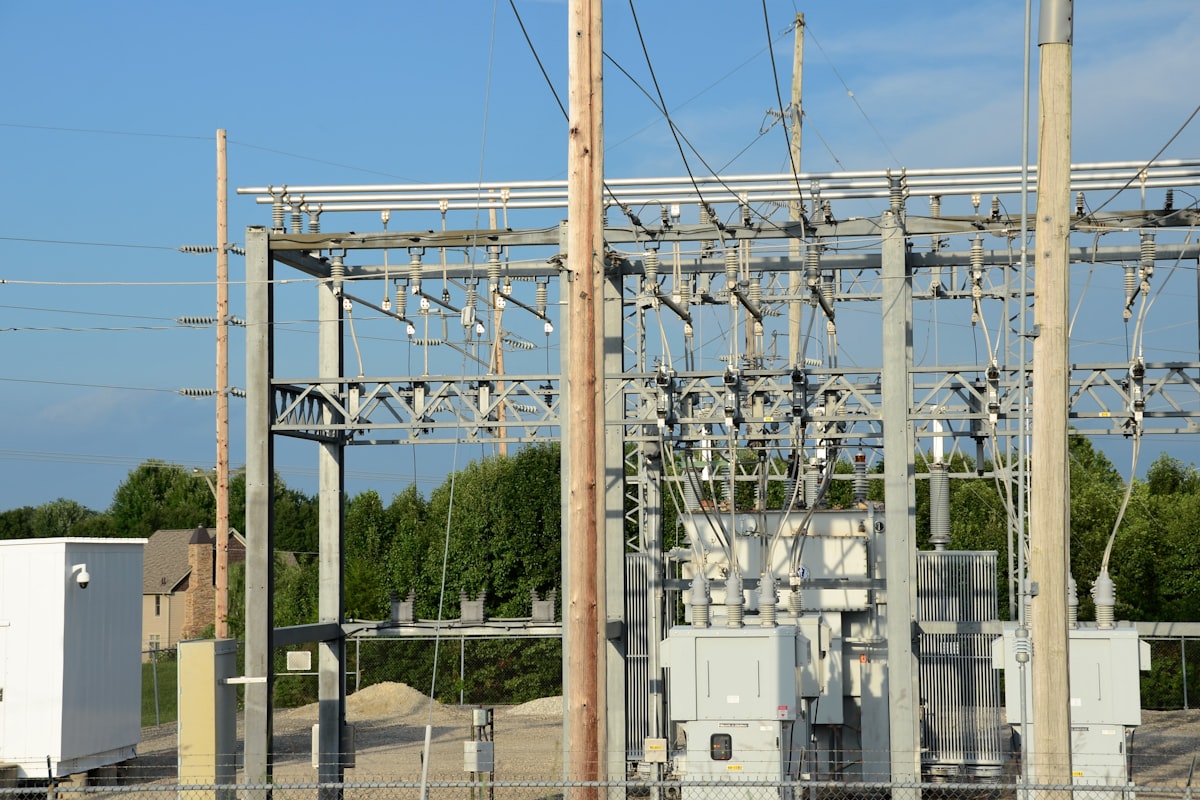
A through-fault on a Pakistani 11 kV feeder lasts a few hundred milliseconds before something in the chain interrupts it. If the wrong something interrupts - the upstream 33 kV breaker instead of the feeder relay - the outage radius expands by an order of magnitude. The difference between "one transformer" and "one feeder area" is the protection coordination scheme, and that scheme lives inside a relay.
For Pakistani DISCOs and industrial substation owners, the relay choice is rarely a clean-slate exercise. The switchgear is installed, the cubicle has a standard panel cutout, the CT ratios are fixed. What is flexible is which relay drops into that cutout - and whether it will hold up for 20 years. SEG Electronics (Germany) manufactures the MRI3 multifunctional relay family and the WIC1 g2 self-powered relay used in compact MV ring main units [1]. This guide covers how to specify SEG relays for Pakistani 11 kV and 33 kV distribution transformer protection, against the IEC 60255 framework and the NEPRA Distribution Code [8].
What protection a distribution transformer actually needs
ANSI/IEEE C37.2 device numbers [9] are the lingua franca for protection specification. A typical 11 kV or 33 kV distribution transformer needs at minimum:
- 50 / 51 - instantaneous and time overcurrent per phase. The 51 element provides time-delayed backup; the 50 element catches fast through-faults.
- 50N / 51N - instantaneous and time overcurrent on the residual earth-fault circuit. On solidly-earthed 11 kV networks, earth-fault current can be a small fraction of phase-fault current - this element is the only one that catches it reliably.
- 49 - thermal protection, modelling transformer winding temperature rise from load current. Mandatory on larger units carrying significant continuous load.
Larger transformers (>5 MVA or generator step-up units) typically add 87T transformer differential - outside the MRI3 family's scope.
Where IEC 60255 sets the bar
Three IEC standards govern measuring-relay specification:
- IEC 60255-1:2022 (2nd ed.) [5] - common requirements: construction, safety, insulation, EMC, environmental conditions, and test methods. The umbrella standard a relay manufacturer must meet for the unit to be sold as IEC-compliant.
- IEC 60255-151:2009 [7] - functional requirements for over/under current protection (replaces IEC 60255-3:1989). Specifies the inverse-time curve families (IEC NI, VI, EI, LTI) and accuracy under steady-state and dynamic conditions.
- IEC 60255-127:2010 [6] - functional requirements for over/under voltage protection - phase, residual/zero-sequence, and negative-sequence functions.
A datasheet that names IEC 60255-151 without the curve family is incomplete - coordination depends on matched shapes.
SEG's MRI3 family - when to pick which variant
The MRI3 series is SEG's digital multifunctional relay for distribution-grade overcurrent and earth-fault protection [1]. The family splits by application:
- MRI3-IHE - universal time-overcurrent with 2nd-harmonic restraint [2][3]. This is the transformer-feeder pick: the harmonic-stabilization function blocks the 50 element during transformer energisation inrush, preventing nuisance trips when a transformer is re-energised after maintenance or a feeder restoration. For 11 kV and 33 kV distribution transformer protection, MRI3-IHE is the default.
- MRI3-IE - non-directional phase plus earth overcurrent, without harmonic restraint [1]. Lower cost than IHE; suitable for feeder-cable protection where transformer inrush is not a concern.
- MRI3-ITE(R) - adds a thermal replica (ANSI 49) function [1]. Useful where transformer thermal protection is not otherwise provided by a winding-temperature sensor.
- MRI3-IRE / MRI3-IRER - directional variants for ring-fed networks where current can flow in either direction [1].
- MRI3-ICE - adds integrated CB control and supervision [1], the pick when the relay also manages local open/close without a separate bay controller.
All MRI3 variants ship in door-mount and 19" rack-mount housings with RS-485 Modbus RTU and 1 A or 5 A CT secondary options [2].
WIC1 g2 - when self-powered makes sense
The WIC1 g2 is SEG's self-powered protection relay [4], drawing operating power from the CT secondary rather than from an external auxiliary DC supply. This is the pick for compact MV ring main units - Schneider Electric's Xiria GIS RMU has shipped with the WIC1 family since 2002 [4].
Why self-powered matters for Pakistani DISCOs:
- Unattended pole-mount and pad-mount installations have no reliable auxiliary supply; a WIC1 g2 still trips on a fault when the substation has lost AC mains.
- Battery maintenance cost disappears - no 24 V or 110 V DC battery to manage over a 20-year asset life.
- Compact form factor fits the limited panel space inside a GIS RMU compartment.
Trade-off: self-powered relays have lower communication and metering capability. For a substation with SCADA infrastructure, an externally-powered MRI3 is the better fit; for a far-flung distribution RMU, the WIC1 g2 is purpose-built.
Common specification pitfalls
Procurement errors on protection-relay tenders cluster in five places:
- Specifying the relay type but not the IEC curve family. "Install a 51 time-overcurrent relay" does not bind the inverse-time curve. IEC 60255-151 [7] defines NI, VI, EI, and LTI curves; coordination depends on matched curve choice across the chain.
- Omitting 2nd-harmonic restraint on transformer feeders. Without harmonic blocking, re-energisation produces inrush current that crosses the 50 setting - the relay trips, the operator clears it, the cycle repeats. MRI3-IHE addresses this directly [3]; MRI3-IE does not.
- Mixing 1 A and 5 A secondary CTs with the wrong relay variant. A 5 A MRI3 on a 1 A CT reads roughly one-fifth of actual primary current - the relay is correct per its rating, but the operator misreads. Match the secondary rating to the installed CT.
- Assuming IEC 61850 GOOSE on every variant. Older MRI3 units ship with Modbus RTU only [1]. IEC 61850 is available on selected variants and on the WIC1 g2; verify the conformance certificate before relying on GOOSE for high-speed trip propagation.
- Treating the NEPRA Distribution Code as a setting guide. It is the regulatory framework [8], not a relay-settings document. Settings flow from the short-circuit study, CT ratios, and downstream coordination - NEPRA sets the framework, not the values.
Sourcing and support in Pakistan
Pacific Engineering & Automation is the authorized SEG Electronics reseller in Pakistan. We supply the full SEG protection-relay range - MRI3 transformer and feeder variants, WIC1 g2 self-powered relays, WIP generator protection, MRM3 motor protection, SIR bay controllers, and PCD control panels - with technical support on protection coordination, IEC 60255 curve selection, and IEC 61850 integration. On the metering side of the same panel, the revenue metering accuracy classes guide covers the CT and meter class selection that sits alongside these relays.
For a coordinated relay specification or product quotation, request a catalogue or contact our engineering team.
Field-derived case studies will be added to this post as Pacific Engineering & Automation accumulates engagement records. The current version is grounded in published specifications, regulatory documentation, and standards body references.
Sources
- SEG Electronics - official product portal
- SEG MRI3-IHE - product page for the harmonic-stabilizing transformer variant
- SEG MRI3-IHE technical manual - datasheet PDF
- SEG WIC1 g2 leaflet - self-powered protection relay (PDF)
- IEC 60255-1:2022 - Measuring relays and protection equipment, Part 1: Common requirements (2nd ed.)
- IEC 60255-127:2010 - Functional requirements for over/under voltage protection
- IEC 60255-151:2009 - Functional requirements for over/under current protection
- NEPRA Distribution Code 2005 - Pakistan regulatory framework (PDF)
- GE Vernova - ANSI Standard Device Numbers & Common Acronyms (PDF)
Pacific Engineering & Automation
Need industrial equipment in Pakistan?
Authorized dealer and reseller for 16 international manufacturers. Karachi-based, serving Pakistan since 1995.