How to Size a Solid-State Relay: Current, Ambient, and Heat Sink
An SSR's amp rating is only valid at 40 °C with a heat sink. How to size a solid-state relay for Pakistani panels: derating above 40 °C, heat-sink selection, zero-cross vs random-fire, and inrush.
A 25 A solid-state relay mounted in a panel that reaches 55 °C in a Pakistani summer is not a 25 A relay. SSR ratings are defined at a reference ambient - typically 40 °C - and every degree above it eats into the current the device can actually carry [3]. Sizing an SSR is therefore not one number but four: load current, panel ambient, heat-sink thermal path, and the inrush the load throws at turn-on.
Shenler builds the RSD panel-mount and RSC slim DIN-rail solid-state ranges that Pacific supplies in Pakistan [1]. This guide covers the sizing arithmetic: what the amp rating actually promises, how derating works, which turn-on type fits which load, and what inrush does to the margin.
The Amp Rating Assumes 40 °C (IEC 60947-4-3)
An SSR is a semiconductor contactor under IEC 60947-4-3, the standard for semiconductor controllers and contactors for non-motor loads in circuits up to 1,000 V AC [2]. Its rated current is a thermal statement, not a switching one: the semiconductor junction must stay below its temperature limit, and the rating is published for a stated reference ambient with a stated thermal path. Panasonic's SSR application guidance puts the standard reference point at 40 °C, with load-current derating per the current-vs-temperature curve required above it [3].
That reference matters in Pakistan because a closed steel panel on a factory floor in Multan or a rooftop plant room in Karachi routinely sits well above 40 °C inside. The datasheet current at 40 °C is the starting point of the calculation, not the answer.
Derating: Reading the Current-vs-Temperature Curve
Every SSR datasheet carries a curve of permissible load current against ambient temperature, and the sizing rule is mechanical: find the real worst-case panel ambient, read the curve at that temperature, and treat the result as the relay's true rating [3]. A device that carries its full rating at 40 °C may be down to a fraction of it at 60 °C. The conducting semiconductor dissipates on the order of 1 W or more per amp switched [1], so a heavily loaded SSR is itself a heater inside the panel - which raises the ambient it must then be derated against. Panel ventilation is part of the SSR specification, the same way it is for a variable-speed drive.
Heat Sinks: Above 10 A, and Fan-Forced Above 60 A
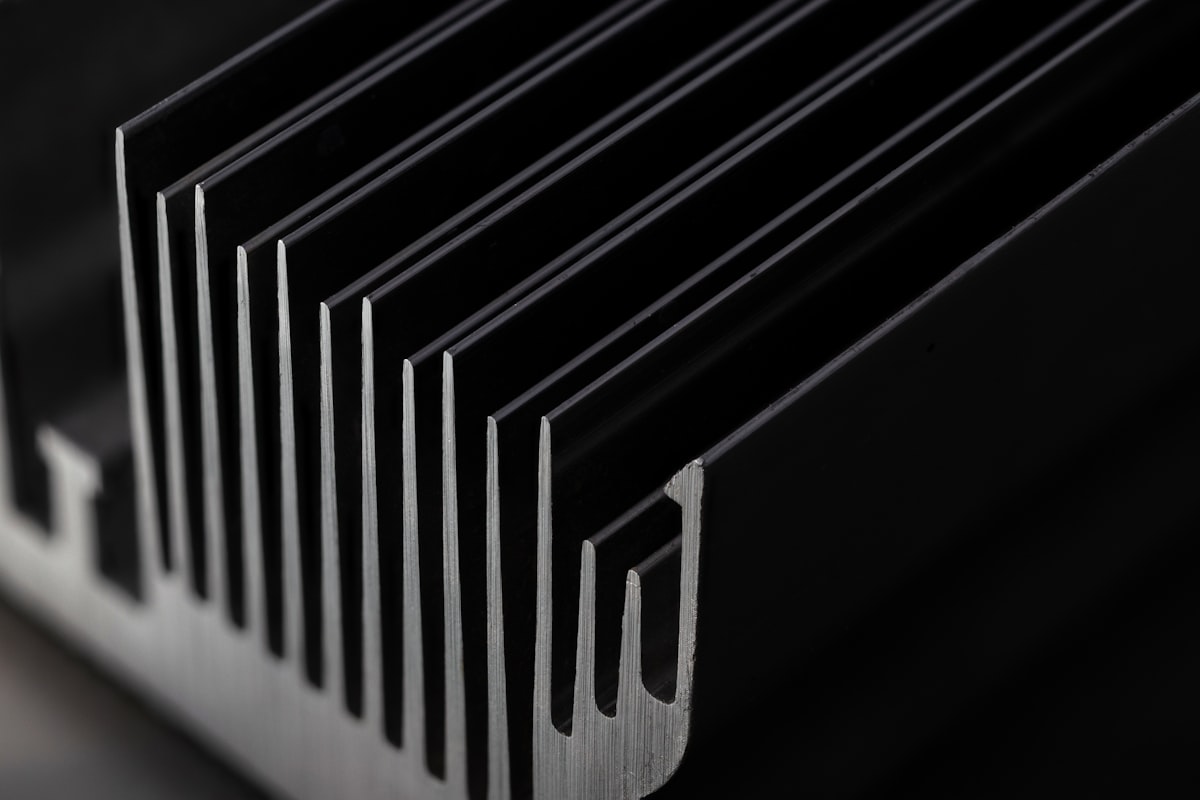
The Shenler RSD series mounts on a metal base plate for exactly this reason, and the datasheet guidance is explicit: a heat sink is required above roughly 10 A, and fan-forced cooling above roughly 60 A [1]. The heat sink is not an accessory; it is the component that makes the amp rating true. Three things void it quietly: mounting the SSR on painted or uneven steel instead of the specified flat conductive surface, stacking several SSRs tight against each other so their derating curves overlap, and omitting the thermal compound between base plate and sink. An enquiry that names the load current but not the mounting surface and sink has only specified half the device.
Zero-Cross vs Random-Fire: Match Turn-On to the Load
AC SSRs come in two turn-on types, and celduc's application note draws the line cleanly [4]. A zero-cross SSR only begins conducting at the start of a mains alternation, which limits inrush and electromagnetic disturbance - the right choice for resistive and lightly capacitive loads such as heater banks, industrial ovens, and heating plates, and for burst-firing temperature control, where whole cycles are applied or cut off. A random-fire (instantaneous) SSR conducts the moment the input commands it, which is required for inductive or highly capacitive loads - transformers, solenoid valves, switch-mode supplies - and for phase-angle control, where zero-cross switching would misbehave [4]. Zero-cross also carries a slight turn-on delay depending on where the mains phase sits; anything needing precise synchronization needs random-fire.
Inrush: Lamps Pull 10 to 15 Times Rated Current
The steady-state amps are not the stress case. Panasonic's application data puts incandescent lamp inrush at roughly 10 to 15 times rated current, with fluorescent loads at 5 to 10 times [3]. Transformer switching adds magnetizing inrush on top. The SSR's non-repetitive surge rating must sit above the real inrush, or the semiconductor fails long before its thermal life is spent. For lamp and transformer duties the sizing rule is to select against the surge figure, not the running current - which usually means a device one or two frame sizes above what the steady-state amps suggest.
SSR, EM Relay, or Contactor: 3 Devices Compared
| Duty | SSR (IEC 60947-4-3) | EM relay (IEC 61810-1) | Contactor |
|---|---|---|---|
| High-cycle resistive (heaters) | best fit [2] | contacts wear in weeks | oversized for the duty |
| Motor switching | out of scope [2] | small motors only | designed for it |
| Provable OFF / isolation | leaks in off state | true air gap | true air gap |
| Thermal cost | heat sink above ~10 A [1] | negligible | negligible |
IEC 60947-4-3 scopes semiconductor contactors to non-motor loads [2], and IEC 61810-1 governs the electromechanical side [5]. The decision logic between the two families is covered in the electromechanical vs solid-state relays guide, and the control-side interfacing in the PLC interface relays guide.
Common Specification Mistakes
The 5 recurring sizing errors against IEC 60947-4-3:
- Sizing at the nameplate amps. The rating holds at 40 °C with the specified sink [3]; a 55 °C Pakistani panel interior needs the derated figure, read off the curve.
- No heat sink named above 10 A. The Shenler datasheet requires one [1]; without it the amp rating is fiction and the failure arrives thermally.
- Zero-cross on an inductive or phase-angle duty. Transformers, solenoids, and phase-angle control need random-fire [4]; the wrong turn-on type misbehaves rather than fails cleanly.
- Ignoring inrush on lamp and transformer loads. At 10 to 15 times rated current for incandescent loads [3], the surge rating - not the steady rating - is the binding constraint.
- SSRs packed shoulder to shoulder. Adjacent devices share their heat; spacing and panel ventilation are part of the rating's fine print [3].
What to Specify When Enquiring: 7 Items
An SSR enquiry that quotes cleanly against IEC 60947-4-3 states:
- Load type and current - resistive, lamp, transformer, or capacitive, with steady-state amps
- Supply - AC or DC, and the voltage; the RSD range splits by output technology [1]
- Worst-case panel ambient - measured or estimated, for the derating calculation [3]
- Turn-on type - zero-cross for resistive and burst firing, random-fire for inductive and phase-angle [4]
- Inrush - the surge multiple the load draws at switch-on [3]
- Mounting and cooling - flat conductive surface, heat-sink space, and ventilation above roughly 10 A [1]
- Control side - input voltage and current from the PLC or controller output
Sourcing and Support in Pakistan
Pacific Engineering & Automation is the authorized Shenler reseller in Pakistan, supplying the RSD panel-mount and RSC slim DIN-rail solid-state ranges alongside the electromechanical relay families, sockets, and coil-protection modules. We help work the sizing through - derated current at the real panel ambient, heat-sink selection, turn-on type, and surge margin - before the enquiry goes out, so the device that arrives is the one the duty needs.
To size an SSR for your load, request a catalogue or quotation or contact our engineering team.
Field-derived case studies will be added to this post as Pacific Engineering & Automation accumulates engagement records. The current version is grounded in published specifications, regulatory documentation, and standards body references.
Sources
- Shenler / Shenle Co., Ltd. - official product portal
- IEC 60947-4-3:2020 - Low-voltage switchgear and controlgear, Part 4-3: Semiconductor controllers and contactors for non-motor loads
- Panasonic Industry - Cautions for Use of Solid State Relays - reference ambient, derating, and inrush application data
- celduc relais - Zero-cross or random relay: what are the differences? - turn-on type selection by load
- IEC 61810-1:2015 - Electromechanical elementary relays, Part 1: General and safety requirements
Pacific Engineering & Automation
Need industrial equipment in Pakistan?
Authorized dealer and reseller for 16 international manufacturers. Karachi-based, serving Pakistan since 1995.