Electromechanical vs Solid-State Relays: When to Use an SSR
EM relay or SSR? The real trade-offs under IEC 61810-1 and IEC 60947-4-3 - switching life, leakage, and the heat-sink rule most specifications miss - with Shenler's RSD and RSC ranges for Pakistan.
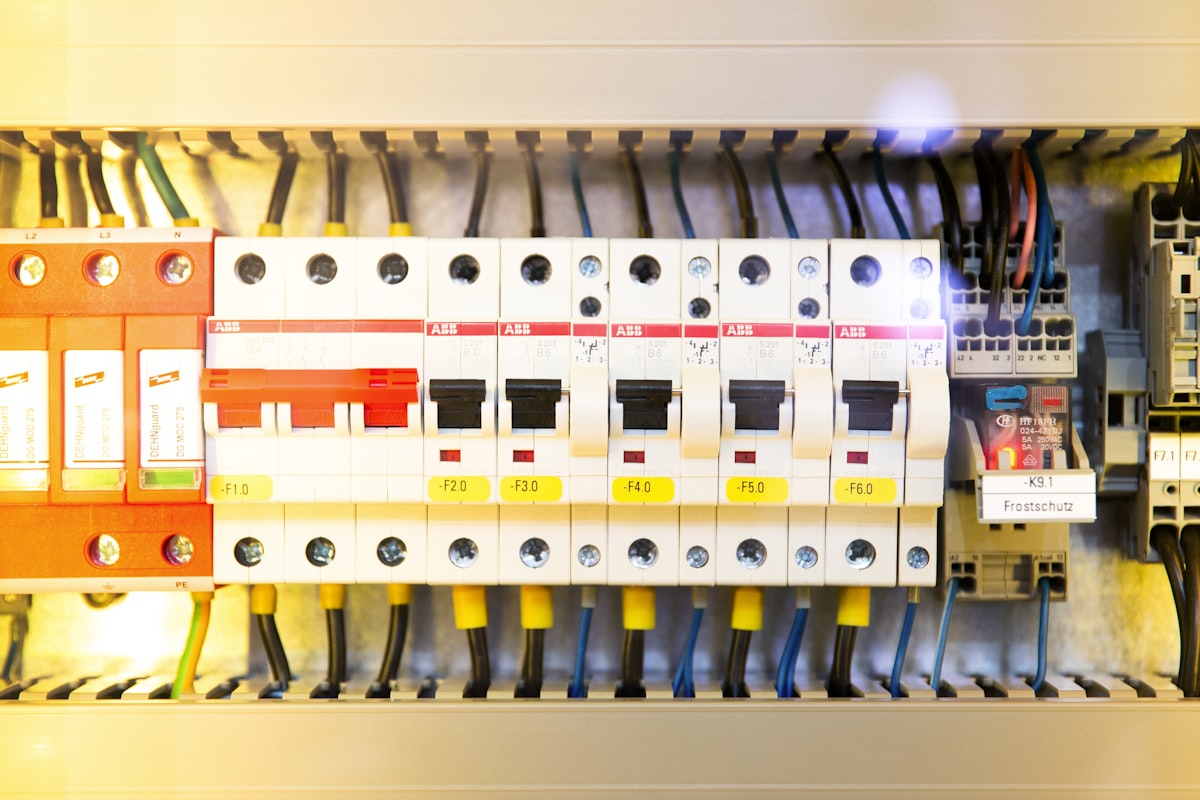
A relay that switches a heater bank every few seconds wears out its contacts in months; the same duty on a solid-state relay runs silently for years - and then cooks itself in a week if nobody fitted the heat sink. The electromechanical-vs-SSR choice is not about which is better. The two devices are covered by different IEC standards because they fail differently, load differently, and cost differently, and most specification errors come from treating them as interchangeable.
Shenler builds both families - electromechanical relays from 5 A miniatures to 40 A power relays, and the RSD and RSC solid-state ranges [1]. This guide covers what each standard actually promises, the heat-sink rule that decides most SSR installations, and which duty belongs to which device.
Two Devices, Two IEC Standards
An electromechanical (EM) relay is a coil moving physical contacts, covered by IEC 61810-1 [2] - the standard that defines its contact ratings, coil data, and electrical endurance in switching cycles. A solid-state relay switches with semiconductors instead - a TRIAC or SCR output for AC, a MOSFET for DC - and falls under IEC 60947-4-3 [3], the standard for semiconductor controllers and contactors for non-motor loads up to 1,000 V AC. The classification is the first clue: the SSR standard says "non-motor loads" because heaters, lamps, and resistive process loads are where semiconductor switching earns its keep.
| Aspect | EM relay (IEC 61810-1) | SSR (IEC 60947-4-3) |
|---|---|---|
| Switching element | physical contacts | TRIAC/SCR (AC), MOSFET (DC) |
| Electrical life | typically 10⁵-10⁶ operations | no contacts to wear |
| Switching speed | milliseconds, audible | milliseconds to sub-ms, silent |
| Off-state | true air gap | leakage current flows |
| Heat at load | negligible | roughly 1 W or more per amp switched |
| Isolation | galvanic, coil to contact | optocoupler input isolation |
The Heat-Sink Rule: Roughly 1 W per Amp
A conducting semiconductor drops about a volt, so an SSR dissipates on the order of a watt per amp - a 25 A heater circuit turns the relay into a 25 W heater of its own. That is why Shenler's RSD series ships on a metal base plate, and why the datasheet mandates a heat sink above roughly 10 A and fan-forced cooling above roughly 60 A [1]. An EM relay carrying the same current dissipates almost nothing at the contacts. The practical rule: an SSR specification is incomplete without the thermal answer - heat sink part, mounting surface, and panel ventilation - and a panel full of SSRs needs its temperature rise checked the same way a variable-speed drive does. The full arithmetic - derating above 40 °C, heat-sink selection, and inrush margins - is worked through in the SSR sizing and derating guide.
Where Each Device Wins: 4 Duties
- High-cycle resistive loads - temperature control, furnace and oven heating, plastics machinery: the SSR's territory [1]. An EM relay at a 2-second cycle spends its 10⁶-operation life in under a month; the RSD has no contacts to spend.
- Motor, contactor-coil, and inductive switching - EM relays and proper contactors. IEC 60947-4-3 [3] scopes SSRs to non-motor loads for a reason: motor inrush and inductive spikes are contact-relay work.
- PLC output interfacing - both exist within a controller's IEC 61131-2 output limits: the slim RSC solid-state interface for fast, silent, high-cycle signals, and the RNC/RFT electromechanical modules covered in the PLC interface relays guide where a true air gap or multi-pole contact is wanted.
- Anything that must be provably OFF - EM relays. An SSR leaks current in the off state [1], enough to hold a small load energised or trip a sensitive circuit; isolation duties need the physical gap.
Leakage, Polarity, Failure Mode: 3 Surprises
3 SSR behaviours surprise specifications written from EM habits [1]:
- Off-state leakage - the semiconductor never fully disconnects; a neon indicator or small solenoid can stay weakly alive.
- Output polarity - a MOSFET DC output has polarity and a TRIAC AC output has none; the RSD range splits by supply type, so "AC or DC load" is a required line in the enquiry.
- Failure mode - contacts tend to fail open; semiconductors commonly fail conducting. Where a stuck-on output is a safety issue, the scheme needs a series contactor or supervisory trip, not just the SSR.
Common Specification Mistakes
The 5 recurring errors when choosing between EM and solid-state:
- An SSR with no heat sink named. Above roughly 10 A the datasheet requires one [1]; the panel builder who discovers this at commissioning derates the whole cabinet.
- An SSR on a motor load. IEC 60947-4-3 [3] scopes semiconductor contactors to non-motor loads; motor duty belongs to contactors and EM switching.
- An EM relay on a 2-second heater cycle. The IEC 61810-1 [2] electrical-life figure is a budget; high-cycle duty spends it in weeks.
- Ignoring off-state leakage. "The relay is off" is not "the circuit is dead" with a semiconductor; isolation and lockout duties need an air gap.
- Quoting a current rating without the thermal context. An SSR's amp rating assumes the specified heat sink and ambient; a bare rating on a hot Pakistani panel wall is fiction.
What to Specify When Enquiring: 6 Items
An enquiry that quotes cleanly against IEC 61810-1 and IEC 60947-4-3 states:
- Load type - resistive, inductive, motor, or lamp, with AC or DC and the voltage
- Current and cycle rate - the amps switched and how often per hour
- Technology - EM relay, SSR, or the slim RSC interface, chosen from the duties above
- Thermal plan - heat sink, mounting, and panel ambient for any SSR above roughly 10 A [1]
- Control side - coil or input voltage from the PLC or controller
- Safety context - whether a provable OFF state or a series contactor is required
Sourcing and Support in Pakistan
Pacific Engineering & Automation is the authorized Shenler reseller in Pakistan, supplying both families - the REH, RGF, RKE, RKL, and RUB electromechanical ranges (5 A to 40 A) with sockets and coil-suppression modules, and the RSD and RSC solid-state ranges with their heat-sink guidance - and we help match the device, thermal plan, and control interface to the duty before the panel is built.
To pick the right relay technology for your load, request a catalogue or quotation or contact our engineering team.
Field-derived case studies will be added to this post as Pacific Engineering & Automation accumulates engagement records. The current version is grounded in published specifications, regulatory documentation, and standards body references.
Sources
- Shenler / Shenle Co., Ltd. - official product portal
- IEC 61810-1:2015 - Electromechanical elementary relays, Part 1: General and safety requirements
- IEC 60947-4-3:2020 - Low-voltage switchgear and controlgear, Part 4-3: Semiconductor controllers and contactors for non-motor loads
Pacific Engineering & Automation
Need industrial equipment in Pakistan?
Authorized dealer and reseller for 16 international manufacturers. Karachi-based, serving Pakistan since 1995.