Surge Protection for Solar PV in Pakistan: DC SPDs Explained
Why AC surge protectors don't work on solar DC strings - IEC 61643-31 PV SPDs, where they go on a Pakistani rooftop or solar park, Ucpv vs string voltage, and CITEL's DPVN range for the DC side.
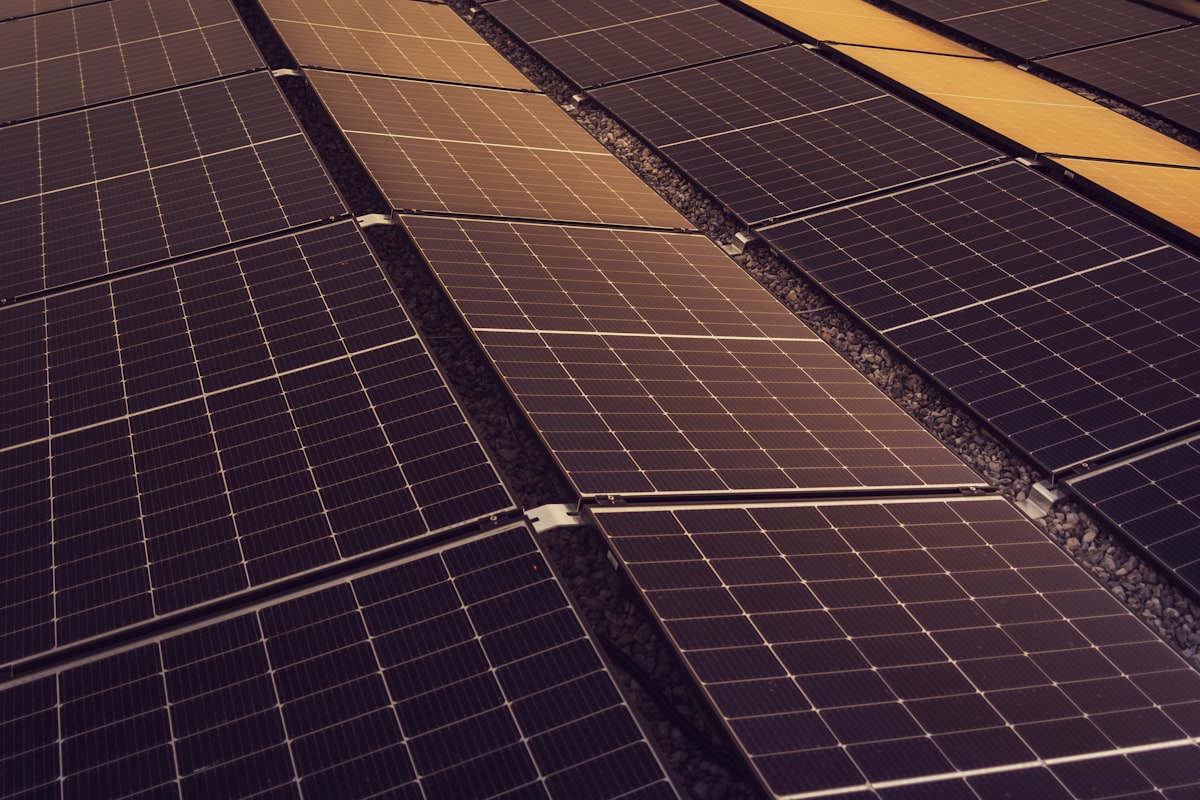
Pakistan's solar boom has put thousands of DC arrays onto the most lightning-exposed real estate a building has: its roof. A nearby strike does not need to hit the panels - the induced surge alone travels the string wiring straight into the inverter, which is both the most expensive box in the system and the least tolerant of overvoltage. Solar installations that faithfully fitted AC surge protection at the switchboard routinely leave the DC side - the side facing the sky - completely bare.
CITEL builds SPDs for both sides of a PV system, and the DC side has its own product line and its own standard [1]. This guide covers why AC devices cannot simply be reused on DC strings, where PV SPDs actually go, and how to match the SPD to the string voltage.
Why AC SPDs Don't Work on DC Strings (IEC 61643-31)
PV surge protection has a dedicated standard - IEC 61643-31, covering SPDs for photovoltaic installations up to 1,500 V DC [3] - because DC arrays break two assumptions AC devices are built on. First, an AC fault arc extinguishes itself at the next zero-crossing, 100 times a second on a 50 Hz system; a DC arc has no zero-crossing and simply burns until something disconnects it. Second, a PV array is a current source that keeps feeding a fault as long as the sun shines. A failing SPD on a DC string therefore needs a disconnection and fail-safe behaviour that an AC-catalogue device was never tested for - which is exactly why CITEL's PV range is a separate line, the DPVN, built on its patented CTC-Technology and explicitly succeeding the older DS50PV series [2].
Where the SPDs Go: 3 Points
| Point | Side | Device and standard |
|---|---|---|
| Array / combiner box | DC | PV SPD per IEC 61643-31 [3] (DPVN) |
| Inverter DC input | DC | PV SPD per IEC 61643-31 [3] (DPVN) |
| Inverter AC output / switchboard | AC | Type 1/2 SPD per IEC 61643-11 [1] |
The logic follows IEC 62305-4's zone thinking [4]: protect at the boundary where the surge enters. Where the array sits close to the inverter, one DC SPD at the inverter input can cover both; where strings run a long way - a large rooftop or a ground-mounted park - fit SPDs at both ends of the DC run, because the cable between them is an antenna for induced surges. The AC side then needs its own coordinated protection, which the CITEL surge protection tiers guide covers for Pakistani distribution boards.
Ucpv: Matching the SPD to the String (IEC 61643-31)
The governing parameter on a PV SPD datasheet is Ucpv - the maximum continuous operating voltage on the DC side, defined under IEC 61643-31 [3]. It must sit above the string's worst-case open-circuit voltage, which occurs on the coldest sunny morning of the year, not at noon in June: PV voltage rises as temperature falls. A 1,000 V-class string commissioned in a Karachi summer can exceed its assumed Voc on a cold clear January morning up-country. The rule: compute the cold-condition Voc from the module datasheet and the site's minimum temperature, then select the DPVN variant whose Ucpv sits above it [2].
Earthing Comes First (IEC 62305-4)
An SPD diverts surge current to earth; it is only as good as the earth it diverts into [1]. A rooftop array whose frames and mounting rails are not bonded, or a ground-mount park with high electrode resistance, turns the SPD's operation into a voltage rise across the whole system. Per IEC 62305-4, SPDs are one layer of a scheme that assumes earthing and equipotential bonding are in place [4] - and no SPD makes an installation lightning-proof; the standard's own framework treats protection as risk reduction, not elimination.
Common Specification Mistakes
The 5 recurring errors on Pakistani PV installations:
- An AC SPD on the DC string. DC arcs do not self-extinguish and the array keeps feeding the fault; only an IEC 61643-31 [3] device is tested for that duty.
- Ucpv below the cold-morning Voc. String voltage is highest exactly when winter surges arrive; size Ucpv against cold-condition open-circuit voltage, not the nameplate operating point [3].
- One SPD for a long DC run. An array far from its inverter needs protection at both ends of the string cabling, not just one.
- A protected DC side and a bare AC side (or vice versa). The inverter sits between two surge paths; IEC 62305-4 [4] coordination covers both or the inverter pays for the gap.
- SPDs on an unbonded array. Without frame bonding and low-resistance earthing, the SPD has nowhere to send the surge; fix the earth before buying the protector [1].
What to Specify When Enquiring: 6 Items
A PV surge-protection enquiry that quotes cleanly against IEC 61643-31 states:
- System voltage - string Voc at the site's minimum temperature, and the 1,000 V or 1,500 V DC class [3]
- Array layout - string count, combiner boxes, and the DC cable distance from array to inverter
- Inverter details - central or string inverters, and their surge withstand if published
- AC side - the switchboard SPD tiers already in place, for coordination [4]
- Earthing state - frame bonding and electrode resistance as measured, not assumed
- Environment - rooftop or ground mount, and exposure (open ground, ridge lines, tall structures nearby)
Sourcing and Support in Pakistan
Pacific Engineering & Automation is the authorized CITEL reseller in Pakistan, supplying the DPVN DC range alongside the AC Type 1/Type 2 lines and data-line SPDs - one coordinated scheme from the string to the switchboard, for rooftop commercial systems and utility-scale parks in K-Electric and DISCO service territories alike. We help compute the cold-condition Voc, pick the Ucpv class, and coordinate the AC side before the enquiry goes out.
To protect a solar installation end to end, request a catalogue or quotation or contact our engineering team.
Field-derived case studies will be added to this post as Pacific Engineering & Automation accumulates engagement records. The current version is grounded in published specifications, regulatory documentation, and standards body references.
Sources
- CITEL Surge Protection - product family overview
- CITEL DPVN PV SPD range - current DC PV line with CTC-Technology
- IEC 61643-31:2018 - Low-voltage surge protective devices, Part 31: Requirements and test methods for SPDs for photovoltaic installations
- IEC 62305-4:2010 - Protection against lightning, Part 4: Electrical and electronic systems within structures
Pacific Engineering & Automation
Need industrial equipment in Pakistan?
Authorized dealer and reseller for 16 international manufacturers. Karachi-based, serving Pakistan since 1995.